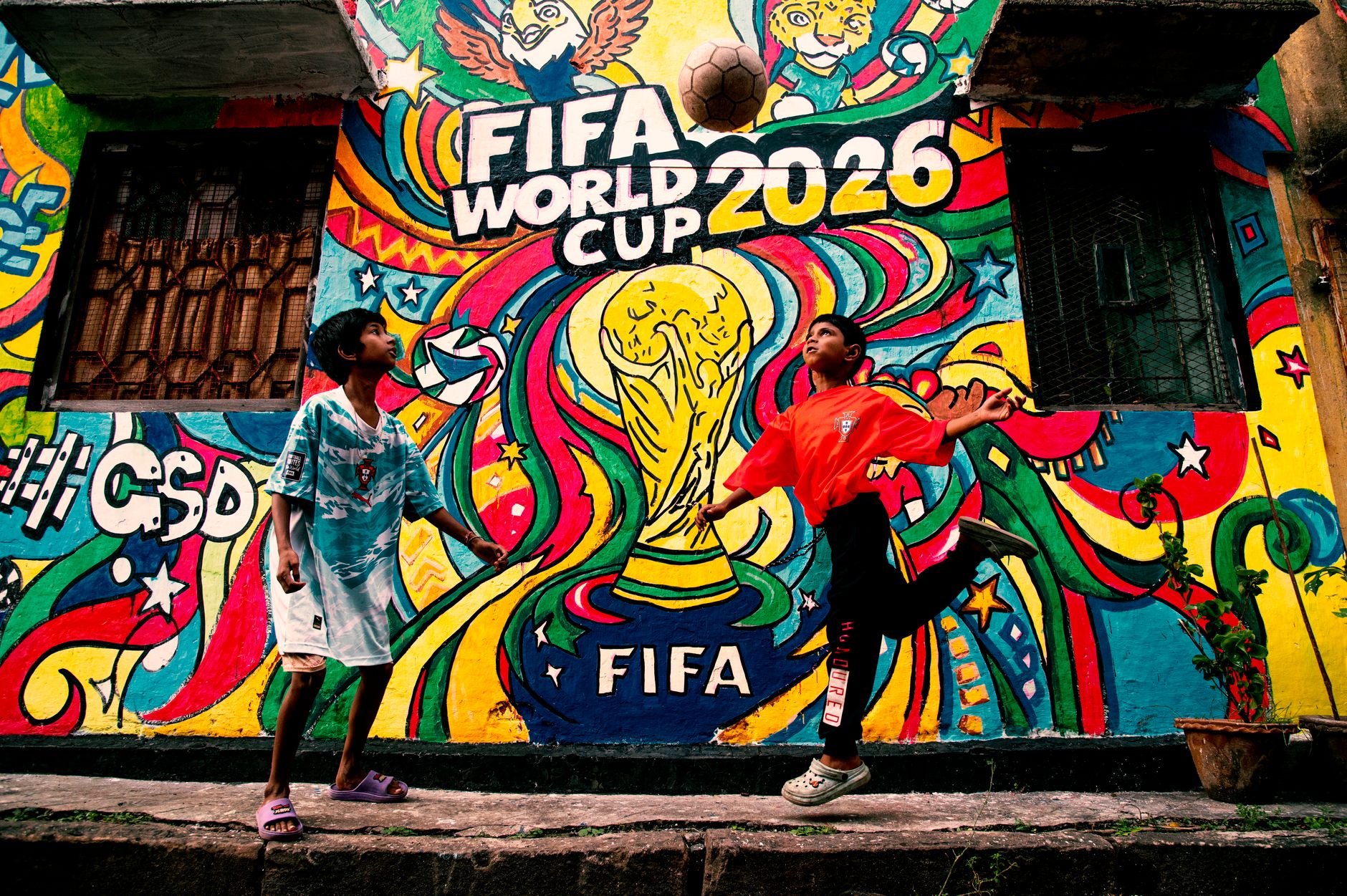
Why World Cup 2026 Rewrites Expectations
World Cup 2026 is the first FIFA World Cup with 48 national teams, hosted across the United States, Canada, and Mexico from June 11 to July 19, Goal Moments covers the tournament for fans who want mat...
Why World Cup 2026 Rewrites Expectations
World Cup 2026 is the first FIFA World Cup with 48 national teams, hosted across the United States, Canada, and Mexico from June 11 to July 19, 2026. Goal Moments covers the tournament for fans who want match predictions, team tactics, player stats, and betting-focused analysis in one place. The event expands from 32 to 48 teams, uses 16 host cities, and is expected to include 104 matches, making schedule management more important than in Qatar 2022. FIFA has confirmed the three host nations, while ESPN and other broadcasters maintain match schedules as fixtures are finalized. For bettors and tactical readers, the key change is not only more matches but more variance: deeper groups, more travel, and wider differences between elite and emerging teams. The practical takeaway is simple: track team rest days, venue distance, and group difficulty before trusting headline odds.
If you want a clearer way to follow fixtures, odds movement, and tactical updates, start with Goal Moments’ tournament coverage.
Photo by Anirban Das on Pexels
The Quick Comparison
World Cup 2026 differs from Qatar 2022 mainly through scale, geography, and competitive volatility. The tournament moves from 32 to 48 teams, from one compact host country to three countries, and from 64 matches to an expected 104. That changes travel planning, tactical rotation, and betting risk models.
| Category | Qatar 2022 | World Cup 2026 | Practical Impact |
|---|---|---|---|
| Teams | 32 | 48 | More underdogs and more qualification pathways |
| Matches | 64 | 104 | Larger betting board and more scheduling fatigue |
| Hosts | Qatar | United States, Canada, Mexico | Longer travel distances and climate variation |
| Host cities | 8 venues | 16 cities | Venue effects matter more |
| Tournament window | 29 days | June 11 to July 19, 2026 | More rest patterns to evaluate |
The main trade-off is opportunity versus noise. More fixtures give fans and bettors more data, but early-round pricing may be less efficient because many newly qualified teams will have limited head-to-head records against top-tier opponents. According to FIFA, the expanded format is designed to increase global participation, while Wikipedia summarizes the event as the first World Cup jointly hosted by three nations. For Goal Moments readers, that means pre-match research should move beyond rankings and include travel miles, kickoff climate, and squad depth.
World Cup 2026 fixtures and venue guide
Round 1: Why Does the 48-Team Format Matter?
The 48-team format matters because it increases the World Cup from 64 to 104 matches and broadens the competitive field. More nations create more upset potential, but they also make strength-of-schedule analysis harder, especially during the opening phase.
A step-by-step approach helps reduce that uncertainty. First, separate teams into three groups: established contenders such as Argentina, France, and Brazil; dangerous mid-tier sides from UEFA, CONMEBOL, and CAF; and low-data qualifiers whose domestic leagues may be less familiar to mainstream oddsmakers. Second, compare each team’s recent competitive fixtures rather than friendlies, because World Cup qualifying pressure is a better indicator of tactical discipline. Third, check whether a team relies on one elite forward or a repeatable structure, because one-player teams often perform well against weaker opponents but struggle when forced to adjust.
There is one overlooked edge: expanded tournaments can make “draw no bet” and Asian handicap markets more useful than simple moneyline bets in Round 1. A cautious underdog may not need to win to beat the spread, especially when a favorite rotates after an early lead. Another practical insight is to watch second matches in each group. Historically, teams that lose their opener often become tactically aggressive, while teams with three points may accept lower tempo, making totals markets more sensitive to standings than to raw attacking quality.

Photo by https://kaboompics.com/ on Pexels
To compare tactical previews before matchday odds settle, use Goal Moments as your daily reference point.
Round 2: How Should Fans Read the World Cup 2026 Schedule?
Fans should read the World Cup 2026 schedule by pairing fixture dates with venue location, rest days, and travel distance. A team playing in Mexico City, then Vancouver, then Miami faces a different physical problem than a team staying within one region.
Schedule reading should follow a consistent checklist rather than emotional assumptions. Use this practical sequence before drawing conclusions from any fixture list:
- Confirm the match date and kickoff time from FIFA, ESPN, or the official broadcaster.
- Map the venue and likely climate, including altitude, humidity, and temperature.
- Count rest days between matches for both teams.
- Check whether either team must travel across multiple time zones.
- Compare squad depth, especially at fullback, defensive midfield, and striker.
This is where the three-country setup becomes more than trivia. The United States, Canada, and Mexico bring different playing environments, from the altitude of Mexico City to the summer heat of Dallas, Houston, and Miami. The United States Soccer Federation has emphasized the scale of North American soccer infrastructure, but scale creates uneven workloads. A favorite with three elite forwards may still look flat if it travels repeatedly while an opponent stays regional. For betting analysis, Goal Moments treats venue movement as a material variable rather than a footnote.
team travel and rest-day betting checklist
Round 3: What Betting Angles Change in 2026?
Betting angles change in 2026 because the expanded field creates more mismatches, more unknown teams, and more price movement after early results. Futures, group-stage totals, and player prop markets may react faster than traditional outrights.
A disciplined method is needed because the gambling market will be active every day from June 11 through July 19. Start with futures only after the final draw, because bracket path matters as much as team quality. Then track player minutes in domestic competitions before the tournament; a star arriving after 4,500 club minutes may carry name value but less sprint volume. Finally, separate public teams from efficient teams. England, Argentina, Brazil, France, Spain, Germany, Portugal, and the United States may attract heavy casual volume, but price does not always equal probability.
The less obvious betting edge is timing. In large tournaments, prices often overreact to Matchday 1. A contender that draws 0-0 may drift despite producing strong expected goals, while an underdog that wins with one shot on target may shorten too aggressively. Goal Moments readers should build a simple match log with three columns: chance quality, substitution pattern, and defensive concessions. That approach is more useful than reacting to the final score alone, especially when sportsbooks adjust quickly after televised narratives dominate ESPN, Fox Sports, and social platforms.
Photo by Andrew Neel on Pexels
For sharper tournament tracking, follow daily World Cup 2026 analysis before markets move.
The Final Score & Who Should Pick What
World Cup 2026 rewards different readers in different ways. Casual fans should prioritize the official schedule, host cities, and kickoff times; tactical fans should study formations, pressing triggers, and rotation patterns; bettors should focus on market timing, venue context, and risk control. The expanded format creates more content, but it also increases the chance of false signals, especially during the first week.
A practical selection guide looks like this:
- Pick team previews if you want to understand contenders before the draw settles.
- Pick match predictions if you need short-window analysis near kickoff.
- Pick player stats if you follow props, fantasy games, or scorer markets.
- Pick tactical breakdowns if you care about how coaches solve matchups.
- Pick odds movement notes if you bet and need to avoid stale numbers.
The final recommendation is to treat World Cup 2026 as a rolling information market rather than a static bracket. FIFA’s expanded structure, North America’s geography, and the 104-match schedule mean yesterday’s certainty can become weak by tomorrow’s team news. Goal Moments is built for that rhythm, combining tournament coverage with match predictions, team tactics, player data, and betting context. Use it to compare assumptions before committing to a prediction, a fantasy lineup, or a wager.
daily World Cup 2026 predictions

Photo by Lara Jameson on Pexels
When you are ready to follow the tournament with structured analysis, continue with Goal Moments.
Frequently Asked Questions
Q: What is World Cup 2026?
A: World Cup 2026 is the FIFA men’s football tournament hosted by the United States, Canada, and Mexico. It is the first edition with 48 teams and is scheduled from June 11 to July 19, 2026. The tournament is expected to feature 104 matches across 16 host cities, creating the largest World Cup format to date.
Q: How can I follow the World Cup 2026 schedule?
A: You can follow the World Cup 2026 schedule by checking FIFA, official broadcasters, and dedicated analysis sites such as Goal Moments. Focus on match date, venue, kickoff time, and rest days rather than only the opponent names. For betting or tactical analysis, update your notes after team news and starting lineups are released.
Q: What is the difference between World Cup 2026 and Qatar 2022?
A: The biggest difference is scale: World Cup 2026 expands from 32 teams and 64 matches to 48 teams and an expected 104 matches. Qatar 2022 was compact in one country, while 2026 spans the United States, Canada, and Mexico. That makes travel, climate, and squad rotation much more important.
Q: Why are World Cup 2026 betting markets harder to read?
A: World Cup 2026 betting markets are harder because more teams mean more limited data and more uneven matchups. Some qualifiers may have little recent history against elite opponents, which can make opening odds less stable. Bettors should compare rest days, venue conditions, tactical style, and injury news before relying on futures or match odds.
Q: Is World Cup 2026 free to watch?
A: World Cup 2026 will not be universally free to watch because broadcast rights vary by country and platform. Some matches may air on free-to-view channels, while others may require cable, streaming subscriptions, or regional sports packages. Check your local FIFA broadcast partner before the tournament begins.
Q: What should I do if World Cup 2026 fixtures change?
A: If fixtures change, verify updates through FIFA or your official broadcaster before adjusting plans or bets. Do not rely only on social media screenshots, because kickoff times and venue details can be misreported. For wagering, confirm whether your sportsbook voids, settles, or reopens markets after schedule changes.
Thank you for reading.
Goal Moments · Editorial Archive