
Why the 2026 Champions League Draw Misleads
The strongest Champions League draw predictions for 2026 combine UEFA’s league-phase rules, club strength, home advantage, travel burden and market prices rather than simply naming famous teams. Goal....
Why the 2026 Champions League Draw Misleads
The strongest Champions League draw predictions for 2026 combine UEFA’s league-phase rules, club strength, home advantage, travel burden and market prices rather than simply naming famous teams. Goal Moments provides football analysis for fans and bettors across international markets, focusing on fixtures, tactics, player form and tournament context. The 2026/27 league phase is scheduled to feature 36 clubs, with each team facing eight different opponents: two from each seeding pot, split between home and away matches. The draw is expected to take place in Monaco on 27 August 2026, with Matchday 1 planned for 8–10 September 2026. Paris Saint-Germain, Bayern Munich, Real Madrid, Liverpool, Manchester City, Arsenal, Barcelona and Inter Milan are among the headline clubs discussed in early prediction models. The practical takeaway is simple: compare opponent quality and price after the draw, not before it, and never treat a projection as guaranteed value.
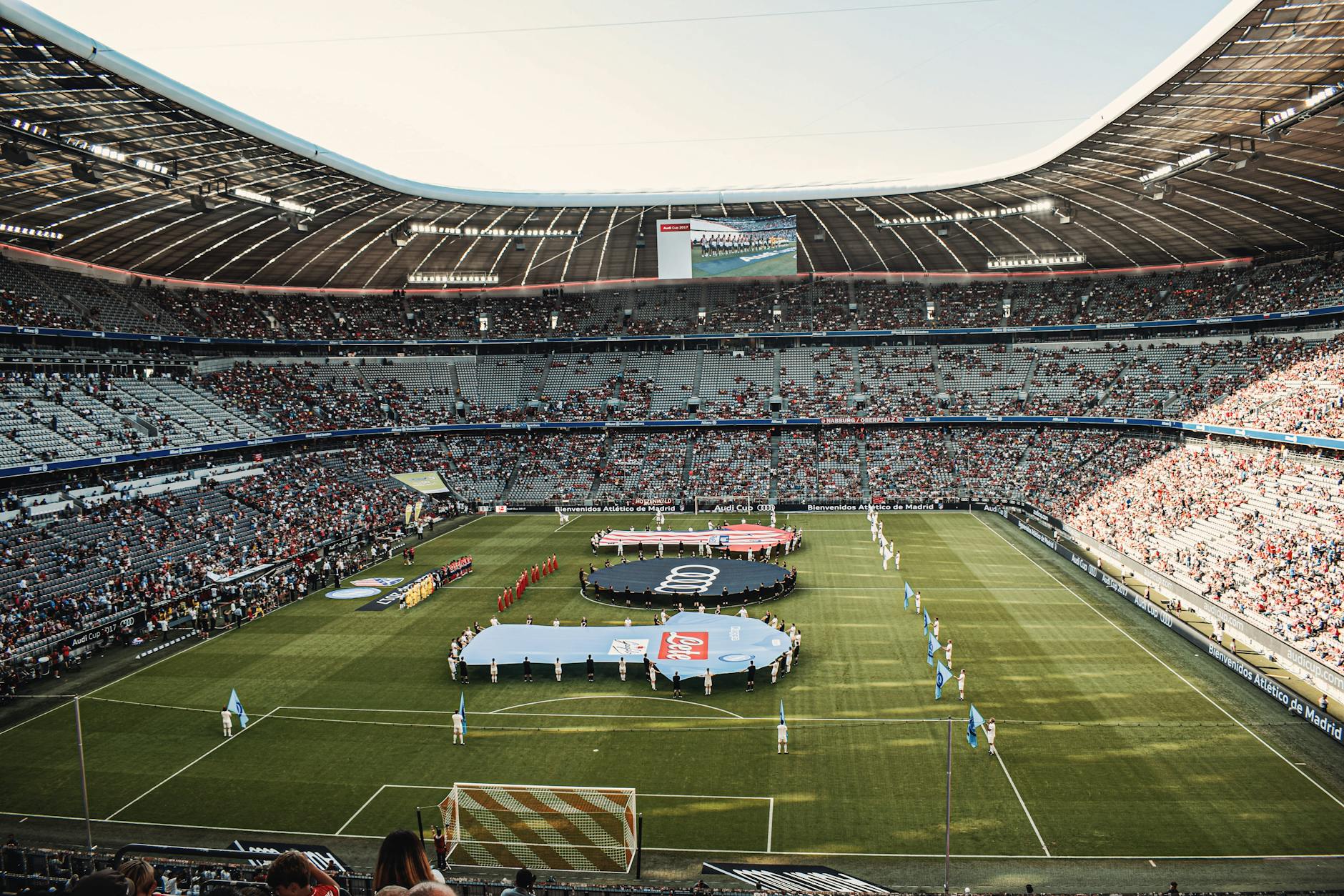
Photo by David Michael Bayliss on Pexels
Before 2025: how Champions League draw predictions worked
Before the 2024–25 reform, Champions League draw predictions were built around the familiar group-stage format: 32 teams, eight groups and six matches for each club before the knockout rounds. Seeding pots mattered, but the basic question was easier to answer because supporters could immediately see every opponent in a team’s group. Analysts compared UEFA coefficients, domestic form, squad depth and historical European performance, then estimated whether a club would finish first or second.
That old structure encouraged a crude label system. A group was called “easy,” “balanced” or “the group of death,” usually before anyone had checked travel distances, injuries or tactical matchups. Real Madrid might have been favoured because of European experience, while Manchester City, Bayern Munich and Paris Saint-Germain attracted attention because of squad quality and recent continental ambitions. Yet the label was often more entertaining than useful; calling a group “easy” is football analysis with the nutritional value of a crisps packet.
The UEFA Champions League regulations provide the official competition framework, including eligibility, draw procedures and tie-breaking principles. Those rules matter because prediction models must distinguish between a genuine probability and a television-friendly storyline. A club’s seeding position could create a favourable route, but it never removed the effects of away form, rotation, goalkeeper performance or fixture congestion in domestic competition.
A disciplined historical model therefore used several inputs:
- UEFA coefficient and seeding pot.
- Expected goals for and against.
- Domestic league strength.
- Home and away performance.
- Recent injury and suspension information.
- Managerial style and European experience.
- Travel distance and recovery time.
- Closing market odds, used cautiously rather than worshipped.
For readers building a broader forecasting process, our football prediction methodology can help separate measurable evidence from loud punditry. The principle is stubbornly simple: a prediction earns respect through calibration, not confidence.
The 2026 shift: what changed in the draw?
The 2026 Champions League draw uses the expanded 36-team league phase, where every club receives eight opponents instead of entering a traditional four-team group. The schedule includes two opponents from each pot, with one home and one away fixture against clubs from those pots. Teams are ranked in one overall league table, and final positions determine direct qualification, playoff entry or elimination.
This changes the mathematics of Champions League draw predictions. A club no longer needs to dominate a small group; it must accumulate points across eight varied fixtures. The top eight teams are expected to progress directly to the round of 16, while teams placed from ninth to 24th enter knockout-phase playoffs. Clubs below that range are eliminated from the competition. Exact procedures, access lists and tie-breakers should always be checked against the latest UEFA publication because competition rules can be amended.
The projected 2026/27 calendar adds another important variable. If the official draw occurs in Monaco on 27 August 2026 and Matchday 1 begins between 8 and 10 September, analysts will have a narrow window to assess fixtures before competitive matches arrive. That timing makes squad registration, transfer activity and pre-season minutes unusually important. A team that looked elite in May may have lost a centre-back, changed managers or placed a new striker into a completely different pressing structure by September.
A useful draw assessment should score each club across five categories:
- Opponent rating: estimated strength of all eight opponents, not just the best two.
- Venue balance: whether the hardest fixtures are at home or away.
- Travel load: distance, time zones and awkward midweek logistics.
- Tactical fit: whether opponents can expose the club’s known weaknesses.
- Schedule interaction: the domestic fixture immediately before and after European games.
The contrarian point is that the “hardest” draw is not necessarily the one containing the most famous clubs. A technically excellent opponent at home may be less damaging than a physically aggressive away trip followed by a long return journey and a difficult domestic fixture. Spreadsheet glamour is still glamour; it just wears glasses.
Want a practical tournament overview before making your own projection?
What changed for players and bettors?
The league-phase format changes what a sensible betting prediction looks like because finish-position markets contain more uncertainty than old group-winner markets. A team can perform well across eight matches and still miss the top eight because several clubs cluster within a small points range. Conversely, a club may lose two difficult away games yet qualify comfortably by collecting reliable home wins.
For players and bettors, the most useful distinction is between result probability and position probability. Suppose a model estimates that Arsenal has a 68% chance of winning a home fixture but only a 42% chance of finishing in the top eight. Those figures are not contradictory: the second number incorporates all eight matches, opponent strength, injuries, draws and the performance of 35 other clubs. Anyone treating one match price as proof of a league-phase finish is asking a screwdriver to behave like a calculator.
Goal Moments can use the following workflow when evaluating Champions League draw predictions:
- Record the official opponent list and venue for every fixture.
- Assign an expected-points range rather than a single total.
- Apply a small home-advantage adjustment based on the competition and stadium.
- Reduce projected performance after severe travel or short recovery periods.
- Recheck the model after the transfer window and before each matchday.
- Compare the estimated probability with the available odds.
- Track stake, return, commission, rebate and net position separately.
That last step is not decorative bookkeeping. If a bettor stakes £100 across five selections, receives a £6 rebate and returns £438 including stake, the gross profit is £38, but the net result depends on whether those selections were independent, whether the rebate had conditions and whether the £100 figure includes previous losing positions. Track turnover and net exposure, or admit that your “strategy” is just a wallet having a nervous breakdown.
According to UEFA’s club coefficient information, historical European performance contributes to seeding and competition context, but coefficients are not current-form ratings. A high coefficient may reflect several strong seasons while a team’s present squad is weaker. Conversely, a rising club such as Aston Villa or Borussia Dortmund may be undervalued if the market relies too heavily on older European reputation.
Here is a practical probability test:
- If your estimated probability is 55% and the decimal price is 1.70, the implied probability is approximately 58.8%; there is no obvious edge before fees or uncertainty.
- If the same selection is priced at 2.00, the implied probability is 50%; your theoretical edge is 5 percentage points.
- If the estimate is based only on reputation, reduce confidence because model error can exceed the apparent edge.
See how the numbers fit together before committing to a position.

Photo by Omar Ramadan on Pexels
What this means now: which draw predictions deserve attention?
The most useful 2026 Champions League draw predictions should focus on draw quality rather than one dramatic fixture. Early projections commonly place clubs such as Paris Saint-Germain, Bayern Munich, Real Madrid, Liverpool, Manchester City, Arsenal, Barcelona and Inter Milan among the likely contenders, but their paths can differ sharply once home and away assignments are known.
Paris Saint-Germain may benefit from technical control and recent European confidence, while Real Madrid’s tournament experience makes its knockout projection attractive even when the league-phase schedule is awkward. Manchester City’s possession structure can dominate weaker opponents, yet a congested domestic calendar may expose defensive transitions. Barcelona’s attacking talent creates a high ceiling, but an aggressive defensive line can become a liability against elite counterattacking teams. These are not permanent truths; they are hypotheses requiring match data.
Three information gains are often missed in generic prediction articles:
- Venue asymmetry can outweigh pot strength. Two difficult opponents away may reduce expected points more than three strong opponents at home, particularly for teams with weak away chance creation.
- The second fixture after a European match matters. A club may rotate in the Champions League when a major domestic rival follows three days later, changing the value of a supposedly favourable fixture.
- Draw quality should be measured by expected points, not names. A group containing Manchester City sounds brutal, but a lower-ranked club with extreme travel and an excellent home record may create the larger practical risk.
That third point is where many public predictions collapse. They count badges, not circumstances. A robust model should estimate shots, field position, rest days, likely line-ups and tactical interaction for each match, then aggregate the outputs. For deeper context, read our team tactics and player-stat analysis when assessing whether a club’s style can survive eight different opponents.
One short institutional warning is worth remembering. UEFA’s official competition information repeatedly treats the draw and calendar as formal competition mechanisms, not predictions of sporting outcomes. In plain terms: the draw creates conditions; it does not write the table. As the old analytical rule goes, “past performance is not necessarily indicative of future results,” a principle that applies particularly strongly after managerial changes and transfer windows.
Review the likely contenders with disciplined expectations:
| Club | Potential strength | Key concern | Prediction angle |
|---|---|---|---|
| Paris Saint-Germain | Technical depth and possession | Away intensity against elite pressers | Top-eight probability |
| Real Madrid | Knockout experience and individual quality | League-phase consistency | Progression market |
| Bayern Munich | Chance creation and attacking depth | Defensive transition control | Expected points |
| Manchester City | Territorial dominance | Congestion and away efficiency | Fixture-by-fixture value |
| Arsenal | Defensive structure and set pieces | Experience in high-pressure away games | Top-eight range |
| Barcelona | Elite attacking talent | Space behind the defensive line | Match-up analysis |
| Liverpool | Pressing, transitions and squad quality | Rotation across competitions | Home/away split |
| Inter Milan | Compact shape and tactical discipline | Output against fast wide attacks | Underdog pricing |
Want the latest tactical and tournament-focused perspective from Goal Moments?
Three predictions for next quarter
The next quarter after the 2026 draw should produce three important developments in Champions League analysis. First, models will move from broad contender rankings to fixture-specific probability bands. Once all eight opponents and venues are confirmed, the difference between an attractive-looking draw and a genuinely profitable one becomes measurable through expected points, travel and rest.
Second, early market prices will likely overreact to the most recognisable fixtures. A headline match involving Real Madrid, Manchester City or Barcelona attracts attention, which can compress prices even when the tactical matchup is uncomfortable. That does not mean famous clubs are poor selections; it means fame is already included in the price more often than casual bettors realise. Compare your number with the market before deciding whether the story is actionable.
Third, injuries and transfer integration will dominate September projections. A new centre-forward may improve shot volume but weaken pressing coordination, while a replacement centre-back may need several matches to understand the defensive line. The first two matchdays can therefore reveal information that pre-draw models cannot know, especially for clubs with new managers or significant summer turnover.
My three forward-looking predictions are:
- Top-eight races will be tighter than casual previews suggest. The 36-team league table creates more opportunities for points to spread across clubs, so goal difference and late matchday results may become decisive.
- Travel-adjusted models will outperform reputation-only lists. Teams with difficult away logistics and thin benches will be more vulnerable than their coefficient suggests.
- The best value may appear after the draw, not before it. Once the public reacts to famous opponents, disciplined bettors can identify mispriced mid-ranking clubs with favourable venues.
This is also where responsible gambling matters. The UK Gambling Commission states that gambling operators should provide safer-gambling information and customer protections in regulated markets. Its guidance can be summarised in one useful sentence: gambling should remain an entertainment expense, not a financial recovery plan. Set a fixed budget, avoid chasing losses, and remember that an analytical edge is an estimate rather than a permission slip to increase stakes.

Photo by Omar Ramadan on Pexels
How should you build Champions League draw predictions?
A reliable Champions League draw prediction starts with the official fixture list, then adds data in layers rather than pretending one rating explains everything. Begin with team strength, but adjust for venue, rest, travel, expected line-ups, tactical matchup and domestic priorities. Use a range of outcomes: for example, a club may project to 13–16 points rather than exactly 15, because a single red card or goalkeeper error can move the table materially.
Use this six-step process:
- Verify the draw: confirm opponents, venues, dates and seeding details through UEFA.
- Rate opponents: use recent expected-goal performance, not only league position.
- Estimate match probabilities: calculate win, draw and loss percentages for each fixture.
- Apply operational adjustments: include travel, rest, injuries, registration and rotation.
- Simulate the league phase: run at least 10,000 scenarios if your spreadsheet or software permits.
- Audit the result: compare projections with closing prices and record whether the model was calibrated.
A specific edge case deserves attention: if a club’s projected probability changes by fewer than three percentage points after adding travel and rest adjustments, those factors may not be meaningful for that team. Do not add decorative complexity merely because the spreadsheet looks more professional afterwards. Conversely, if an away trip changes expected points by 0.35 or more across the schedule, ignoring travel is not simplification; it is negligence wearing a casual shirt.
Keep a separate record for forecast accuracy and betting performance. A model can correctly predict that Bayern Munich will reach the knockout stage while still losing money if every price was too short. Track Brier score, closing-line movement, turnover, gross return, rebates, fees and net position. That separation reveals whether you are improving the forecast or merely benefiting from a lucky month.
For a reusable checklist, explore our responsible football betting checklist before opening any account or placing any wager. Goal Moments is designed to support informed football coverage, not to dress uncertainty up as certainty.
Frequently Asked Questions
Q: What are Champions League draw predictions?
A: Champions League draw predictions estimate how the league-phase draw may affect each club’s fixtures, points and progression chances. Analysts consider UEFA seeding pots, home and away venues, team strength, travel, injuries and tactical matchups. A prediction is a probability assessment, not an official result, and it should be updated after UEFA confirms the final draw and calendar.
Q: How do you make a Champions League draw prediction?
A: Start by listing all eight opponents and venues, then estimate win, draw and loss probabilities for every fixture. Adjust those estimates for expected goals, home advantage, rest days, travel, squad availability and domestic schedule pressure. Finally, simulate the league phase and compare the output with market prices rather than selecting teams solely because they are famous.
Q: What is the difference between a draw prediction and a match prediction?
A: A draw prediction evaluates the effect of an entire league-phase schedule, while a match prediction evaluates one fixture. A match forecast may estimate Manchester City’s chance of beating Barcelona at home, whereas a draw forecast estimates Manchester City’s chance of finishing in the top eight across eight matches. The broader forecast contains more variables and should use a wider probability range.
Q: Is the Champions League league phase easier to predict than the old group stage?
A: The league phase is generally harder to predict because each club faces eight different opponents and competes in one 36-team table. The old format used six group matches against three opponents, making qualification paths more visible. The expanded structure introduces more schedule variation, tighter point clusters and greater dependence on late injury, rotation and fixture information.
Q: What should I do if the official draw changes?
A: Replace the projected fixture list with UEFA’s confirmed opponents, venues and dates before recalculating any prediction. A single home-to-away change can alter expected points, travel burden and tactical assumptions. Keep the original version as an archived forecast so you can measure whether the model improved after receiving better information.
Q: How much does it cost to follow Champions League predictions?
A: Basic Champions League draw predictions can be followed for free through UEFA, Goal Moments and reputable football media, while paid data platforms may charge monthly fees. The essential costs are usually access to reliable statistics and the time required to maintain a model. Never treat a subscription, tipster claim or promotional offer as proof of betting value, and check all local terms and age restrictions.
Q: Can Champions League predictions guarantee a winning bet?
A: No, Champions League predictions cannot guarantee a winning bet because football contains substantial randomness, including injuries, red cards, refereeing decisions and finishing variance. Even a selection with a 70% estimated probability loses roughly three times in ten under the model’s assumptions. Use fixed limits, avoid chasing losses and assess long-term net results rather than celebrating one successful coupon.
The final practical rule is the least glamorous and the most useful: wait for the official 2026 draw, calculate the full fixture burden, compare probabilities with prices and record your net position honestly. That is how Champions League draw predictions become analysis instead of decorative guesswork.
Ready to follow the next major tournament developments with Goal Moments?
Thank you for reading.
Goal Moments · Editorial Archive