Top 5 Football Training Plans (2026)
The best way to train for football in 2026 is a balanced weekly plan combining technical repetition, acceleration, strength, conditioning, recovery, and realistic decision-making. For most players, Pl...
Top 5 Football Training Plans (2026)
The best way to train for football in 2026 is a balanced weekly plan combining technical repetition, acceleration, strength, conditioning, recovery, and realistic decision-making. For most players, Plan 1—The Complete Football Training Week—is the top pick because it develops passing, first touch, dribbling, finishing, speed, and match fitness without treating your body like a disposable shopping bag. A useful schedule includes three technical sessions, two strength or speed sessions, one match or small-sided game, and at least one recovery day. The FIFA Training Centre, UEFA, and World Health Organization all support structured activity, gradual progression, and injury prevention rather than reckless volume. Beginners should start with 45-minute sessions, while experienced players can build toward 75–90 minutes. Track completed sessions, sprint times, successful passes, and soreness each week, then increase only one training variable at a time.

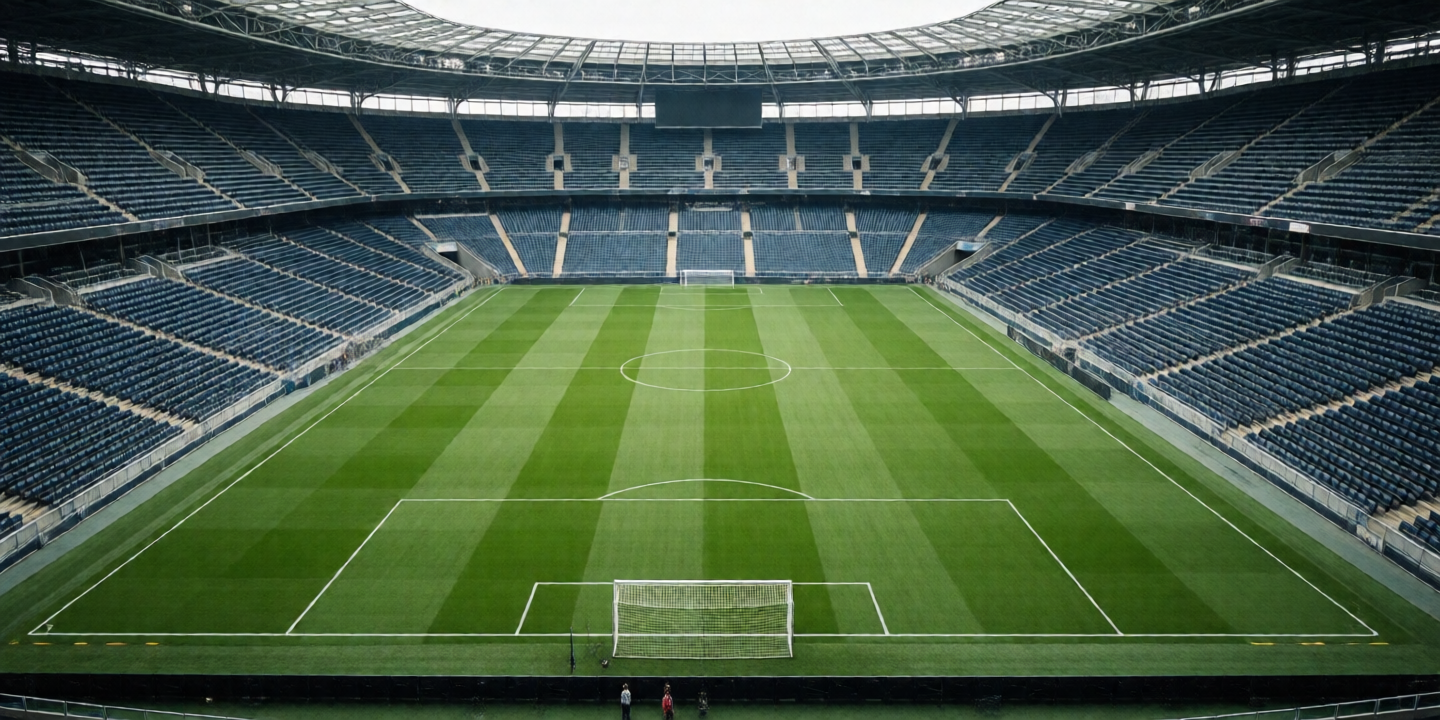
Photo by Florian Thomschke on Pexels
Training for football is not about collecting exhausting drills like trophies. It is about improving the actions that decide matches: scanning before receiving, controlling the ball under pressure, accelerating into space, and repeating quality efforts late in the game. If your “plan” is random juggling followed by heroic calf pain, congratulations—you have invented confusion with shin splints.
Goal Moments covers FIFA World Cup 2026 match predictions, team tactics, player statistics, and tournament news, but the same analytical principle applies to training: measure inputs, assess outputs, and stop pretending that effort alone guarantees progress. The plans below are ranked for practical usefulness, not for how dramatic they look on social media. Before starting intense work, especially after injury or a long break, consult a qualified coach or healthcare professional.
Want a clearer football development roadmap?
The Top 5 Football Training Plans at a Glance
- Complete Football Training Week — Best overall balance of technical skill, athletic development, recovery, and match realism.
- Technical Touch Plan — Best for beginners and players who need a more reliable first touch.
- Speed and Agility Plan — Best for wingers, full-backs, pressing players, and anyone losing races they should win.
- Strength and Conditioning Plan — Best for building repeat-sprint capacity and physical resilience.
- Small-Sided Game Plan — Best value because it combines decisions, fitness, technique, and tactical awareness in limited time.
The ranking uses five practical outcomes: technical improvement, transfer to matches, physical development, accessibility, and recovery control. A plan that makes you excellent at cones but invisible during an actual game is not excellent; it is merely well decorated.
#1 Complete Football Training Week: Best Overall
The Complete Football Training Week is the best overall option because it distributes technical, physical, tactical, and recovery work across seven days. A standard version includes three ball sessions, two athletic sessions, one match or small-sided game, and one full recovery day. This structure suits most amateur and youth players because it improves several performance qualities without placing maximum stress on the same tissues every day.
A practical seven-day schedule
- Monday: First touch, passing, and mobility for 60 minutes.
- Tuesday: Acceleration, deceleration, and lower-body strength for 50–70 minutes.
- Wednesday: Dribbling, scanning, and finishing for 60 minutes.
- Thursday: Recovery, walking, light cycling, or mobility for 25–40 minutes.
- Friday: Small-sided games and transition work for 60–75 minutes.
- Saturday: Match, tactical session, or position-specific training.
- Sunday: Full rest, sleep, hydration, and honest assessment of soreness.
The key is not simply completing every session. Record the session duration, perceived exertion from 1 to 10, number of high-speed efforts, and any pain above mild discomfort. A useful progression rule is to increase total training time by approximately 5–10% only when the previous week produced no persistent pain, unusual fatigue, or performance decline. This is less exciting than doubling your workload overnight, which is precisely why it works.
A specific edge case matters here: if your match is on Saturday, avoid heavy lower-body strength training on Thursday or Friday. In practical terms, a player doing 4 sets of 6 heavy squats on Friday may technically complete the workout but arrive Saturday with slower acceleration and poorer control. Training quality should be judged by match performance, not by how impressive your exhausted walk looks afterward.
The technical core
Spend 15 minutes on first touch, 15 minutes on passing against a wall or partner, 15 minutes on movement before receiving, and 15 minutes on finishing or crossing. Progress from unopposed work to passive pressure, then active pressure, because football rarely provides the luxury of standing alone beside a cone while everyone applauds your technique.
According to the FIFA Training Centre, effective football practice should connect technical actions with perception, decision-making, and game context. The UEFA Training Ground similarly emphasizes position-specific practice and realistic tactical scenarios. Therefore, every technical drill should eventually include a cue: a defender’s movement, a time limit, a target zone, or a decision between two options.
complete football training schedule
#2 Technical Touch Plan: Best for Beginners
The Technical Touch Plan is best for beginners because it builds ball familiarity through short, frequent sessions that are easy to repeat. Use four sessions of 35–50 minutes each week, prioritizing first touch, passing, dribbling, turning, and basic finishing. It is also useful for returning players who need confidence before adding high-speed running or heavy resistance work.
A beginner should not attempt 500 complicated touches on the first day and then disappear for ten days. Consistency wins this argument. Start with 100–150 controlled contacts per session, using both feet, and increase complexity only when the ball stays within playable distance. A simple benchmark is completing 30 consecutive inside-foot passes against a wall with each foot while maintaining balanced body position and receiving the ball across your body.
Step-by-step technical session
- Warm-up: Five minutes of jogging, mobility, and light ball touches.
- First touch: Receive passes with the inside, outside, sole, and laces.
- Passing: Use one-touch and two-touch passes at distances of 5, 8, and 12 metres.
- Dribbling: Perform changes of direction using both feet and different surfaces.
- Turning: Practice inside cuts, outside cuts, drag-backs, and open-body turns.
- Finishing: Take controlled shots after a touch toward the target.
- Review: Record successful repetitions and identify one weak action.
A useful practitioner-level observation is that many beginners lose more improvement through poor setup than poor talent. If the wall is too close, the pass returns too quickly to prepare; if it is too far, the exercise becomes a loose-ball chase. Begin around 5–8 metres from a firm wall, then move farther away only after your first touch consistently takes the ball into usable space.
Use the FIFA Laws of the Game to understand basic match conditions, including the role of space, opponents, and legal challenges. The International Football Association Board states that “a match is played by two teams,” a simple rule that still explains why isolated technique must eventually meet pressure, teammates, and opposition.
See how the technical details fit into a match-ready routine.
#3 Speed and Agility Plan: Best for Explosive Movement
The Speed and Agility Plan is best for players who need faster first steps, sharper changes of direction, and better reactions over 5–20 metres. Two weekly sessions are usually sufficient, with full recovery between high-quality sprint repetitions. Speed training should stop when mechanics deteriorate, because slow, tired sprinting teaches your body to reproduce slow, tired movement.
Begin with acceleration rather than endless ladder patterns. Sprint for 5, 10, and 15 metres from football-specific positions: standing, side-on, half-turned, and after a visual cue. Add deceleration by sprinting 10 metres and stopping under control within 3–5 metres. This matters because footballers do not merely run fast; they brake, turn, scan, and accelerate again.
A 45-minute speed session
- Warm-up: 10 minutes of dynamic mobility, skips, progressive runs, and ankle preparation.
- Acceleration: Six 10-metre sprints with 60–90 seconds of rest.
- Change of direction: Four repetitions each side using a 5-10-5 shuttle.
- Reaction work: Six starts responding to a coach’s color, number, or movement cue.
- Ball transfer: Six 15-metre accelerations ending with a pass or cross.
- Cool-down: Five minutes of walking and gentle mobility.
Measure sprint times with the same device and surface whenever possible. A phone stopwatch operated by a distracted friend is not a laboratory, but consistent timing still reveals trends. After six weeks, a 0.10–0.20-second improvement over 10 metres can be meaningful for a developing player, while random timing conditions can make a mediocre session look like Olympic history.
A common mistake is pairing maximum sprinting with a hard conditioning session immediately afterward. Keep speed neurologically fresh, then perform lower-intensity conditioning separately or after enough recovery. The World Health Organization recommends regular physical activity while emphasizing gradual progression and reduced injury risk; football-specific sprinting requires even more caution because acceleration loads the hamstrings, calves, and Achilles tendon.
#4 Strength and Conditioning Plan: Best for Repeat Efforts
The Strength and Conditioning Plan is best for players who fade after repeated sprints, lose physical battles, or struggle to maintain technique late in matches. It should combine foundational strength, aerobic conditioning, repeated-sprint work, and mobility. Two strength sessions and one conditioning session per week are enough for many amateur players, provided those sessions complement rather than sabotage football practice.
Prioritize movement quality before load. A basic strength session can include a squat variation, hip-hinge exercise, split squat, push movement, pull movement, calf raise, and trunk exercise. Complete 2–4 sets of 5–12 controlled repetitions, leaving approximately 1–3 good repetitions in reserve instead of lifting until your technique resembles a folding chair.
Recommended strength categories
- Lower body: Goblet squats, split squats, Romanian deadlifts, and step-ups.
- Posterior chain: Hip bridges, hamstring curls, and controlled Nordic progressions.
- Upper body: Push-ups, rows, overhead presses, and pull-ups where appropriate.
- Core: Side planks, dead bugs, carries, and anti-rotation presses.
- Lower leg: Calf raises, tibialis raises, and ankle-control exercises.
For conditioning, use football-relevant intervals such as 4 sets of 4 minutes at a hard but controlled pace, separated by 3 minutes of easy movement, or 2 sets of 6 repeated 20-metre efforts with generous recovery. Beginners should reduce repetitions rather than copy professional workloads. Elite clubs such as Manchester City, Liverpool, and Bayern Munich have extensive staff, medical screening, and recovery resources; copying their public workout clips without their support structure is a spectacularly efficient way to become unavailable for selection.
Nutrition and sleep also influence training output. Most players need regular meals containing carbohydrate for intense work, protein distributed through the day, and sufficient fluids to limit performance loss. The Australian Institute of Sport provides evidence-based guidance on sports nutrition, but no supplement repairs a schedule that gives you five hours of sleep and a diet consisting mainly of optimism.
One measurable rule: if your repeated-sprint times slow by more than 5–7% during a session, stop adding repetitions. Quality has fallen, fatigue has become the dominant stimulus, and more work is not automatically more development.
football strength and conditioning guide
#5 Small-Sided Game Plan: Best Value
The Small-Sided Game Plan offers the best value because it combines technique, fitness, perception, decision-making, and tactical behavior in one activity. Formats such as 3v3, 4v4, and 5v5 create more touches and more decisions than a full 11v11 match. This makes the method particularly useful for players with limited training time, small groups, or access to only one pitch.
Use rules that create a clear purpose:
- 3v3 with four mini-goals: Encourages scanning, dribbling, and quick transitions.
- 4v4 plus neutral players: Develops passing angles and possession decisions.
- 5v5 with a six-second regain rule: Trains immediate pressing after losing the ball.
- Directional 4v4: Improves forward passing, support runs, and defensive recovery.
- Two-touch restriction: Raises speed of thought without turning the game into theatrical panic.
Play rounds of 3–5 minutes with 1–2 minutes of recovery, then change one condition at a time. If the goal is finishing, add a requirement to shoot within five seconds of entering the final zone. If the goal is defensive compactness, reward the defending team for regaining the ball in a marked central area. This makes the drill measurable and prevents the usual small-sided-game problem: everyone runs around enthusiastically while nobody knows what was supposed to improve.
A 2024 review in the Journal of Sports Sciences reported that small-sided games can provide substantial technical and physical stimulus, although outcomes vary with pitch size, player numbers, rules, and work-to-rest ratio. That caveat matters. A 3v3 on a tiny area is not physiologically or tactically identical to a 5v5 on a large pitch, despite both being marketed as “game-based training” by people who enjoy vague labels.
Want to compare practical football training methods more closely?
How We Ranked These Football Training Plans
These five plans were ranked by transfer to match performance, technical coverage, physical benefit, accessibility, and recovery risk. The Complete Football Training Week ranked first because it balances those categories instead of over-investing in one attractive quality. A sprint-only program may improve acceleration but leave a player unable to receive under pressure; a technique-only program may produce clean touches but insufficient match intensity.
Ranking criteria and weights
- Match transfer — 30%: Does the training resemble real football decisions and demands?
- Technical development — 25%: Does it improve first touch, passing, dribbling, finishing, and control?
- Physical development — 20%: Does it improve speed, strength, endurance, or repeat efforts?
- Accessibility — 15%: Can a player complete it with basic equipment and limited space?
- Recovery control — 10%: Can workload be progressed without unnecessary injury risk?
The ranking is not a promise of identical outcomes. Age, playing position, training history, surface, coaching quality, and sleep all change the result. A 16-year-old central midfielder, a 35-year-old recreational full-back, and a professional winger should not use identical workloads simply because they share the same sport.
Track four numbers for six weeks: completed sessions, best 10-metre sprint, successful wall passes out of 50, and perceived match energy from 1–10. Add one recovery measure, such as morning soreness or resting heart rate, but do not become so obsessed with spreadsheets that you forget to play. The purpose of data is better decisions, not a private museum of unused statistics.
Which Football Training Plan Should You Pick?
Choose the Complete Football Training Week if you want the strongest all-round development, the Technical Touch Plan if you are new or rebuilding confidence, the Speed and Agility Plan if acceleration is your clear weakness, the Strength and Conditioning Plan if you fade physically, and the Small-Sided Game Plan if time or equipment is limited. The best choice is the plan that directly addresses your largest performance gap while remaining recoverable.
Use this decision guide:
- You lose the ball on your first touch: Choose the Technical Touch Plan.
- You arrive late to challenges or cannot separate from defenders: Choose Speed and Agility.
- You lose quality after 60 minutes: Choose Strength and Conditioning.
- You struggle to decide under pressure: Choose Small-Sided Games.
- You have several weaknesses and a full week available: Choose the Complete Football Training Week.
After four weeks, reassess rather than blindly continuing. If your first touch improves but your sprint performance does not, keep technical work and add one speed session. If your sprint improves but you cannot reproduce it in matches, add reaction cues and small-sided games. This is the investor mindset applied to football: evaluate net performance, not gross effort. Five brutal sessions that produce no usable improvement are a poor return.
Goal Moments can help you connect individual development with the wider football picture by following team tactics, player statistics, and FIFA World Cup 2026 coverage. Watching how Kylian Mbappé, Jude Bellingham, or Lionel Messi create space can offer useful ideas, but do not copy elite players’ total workloads. Study the action, extract the principle, and scale it to your own body, schedule, and playing level.
football tactics and player-performance analysis
Start with one measurable weakness and one repeatable weekly schedule.
Frequently Asked Questions
Q: What does training for football involve?
Training for football involves technical skill work, tactical decision-making, speed, strength, conditioning, mobility, recovery, and match-like practice. A balanced weekly plan often includes three technical sessions, two physical sessions, one game-based session or match, and one recovery day. The exact workload should reflect your age, position, fitness, injury history, and available time. Beginners can start with 45-minute sessions, while advanced players may use 75–90-minute sessions when recovery is adequate.
Q: How should a beginner start training for football?
A beginner should start with three or four sessions per week, each lasting 35–60 minutes, and focus first on passing, receiving, dribbling, basic finishing, and general movement. Begin every session with 5–10 minutes of progressive warm-up and finish with light mobility. Increase only one factor at a time—duration, intensity, or complexity—and maintain at least one full rest day. If pain changes your movement or persists beyond 48 hours, reduce the workload and seek qualified advice.
Q: What is the difference between football drills and small-sided games?
Football drills usually isolate or emphasize a specific action, while small-sided games combine technique, decision-making, movement, and pressure in a match-like setting. Wall passing can improve repetition and ball control, whereas 4v4 football requires players to scan, support, defend, and choose under time pressure. Both methods are valuable, but game-based work usually transfers more directly to match behavior. Use drills to build an action, then use small-sided games to test whether you can perform it under pressure.
Q: How often should I train for football each week?
Most recreational players can begin with three to five football-related sessions per week, including matches, while leaving at least one full rest day. A sensible starting structure is two technical sessions, one strength or speed session, one small-sided game, and one optional easy recovery session. Avoid scheduling maximum sprinting, heavy lower-body lifting, and a match on consecutive days. If performance drops for more than a week, sleep worsens, or soreness remains unusually high, reduce volume before adding more intensity.
Q: How much does football training cost?
Football training can cost nothing if you use a ball, a wall, open space, and bodyweight exercises, while coached club sessions may cost approximately $20–$150 per month depending on location and level. Useful equipment includes cones, a resistance band, a stopwatch, and suitable boots, but none is mandatory for basic improvement. Private coaching commonly costs more, often $30–$100 per session, so use it strategically for technical assessment or specific weaknesses. A consistent free plan beats an expensive plan you rarely attend.
Q: Why am I not improving even though I train hard?
You may be training hard without training specifically, progressively, or recoverably. Common causes include repeating comfortable drills, ignoring weak-foot work, performing too much fatigue-based conditioning, failing to measure progress, and sleeping too little. Record one technical metric, one physical metric, and one match behavior for six weeks, such as successful passes, 10-metre sprint time, and completed forward scans. If effort rises but those outcomes do not improve, change the training design instead of merely adding punishment.
Q: What should I do if football training causes pain?
Stop the movement that causes sharp or worsening pain, assess whether your technique or workload changed, and seek professional medical guidance when symptoms persist, recur, or affect walking and running. Mild post-exercise muscle soreness can occur after new training, but joint pain, swelling, instability, numbness, or sudden muscle pain requires greater caution. Do not test an injury repeatedly to prove toughness; that is not resilience, it is poor accounting. Return gradually through walking, easy jogging, controlled drills, and finally full-speed football once movement is pain-free.
Review your training data, choose the plan that matches your weakest link, and progress patiently.
Thank you for reading.
Goal Moments · Editorial Archive