
Top 3 Football Formations (2026): 4-3-3 vs 4-2-3-1
Football formations are tactical starting points, not rigid prison cells, and the 4-3-3 is the best overall system for most modern teams. It creates width, supports pressing and gives midfielders clea...
Top 3 Football Formations (2026): 4-3-3 vs 4-2-3-1
Football formations are tactical starting points, not rigid prison cells, and the 4-3-3 is the best overall system for most modern teams. It creates width, supports pressing and gives midfielders clear passing angles, while the 4-2-3-1 offers superior defensive protection and the 3-4-3 adds numerical strength in buildup. Coaches such as Pep Guardiola, Jürgen Klopp and Luis Enrique have shown how the same formation can produce radically different football through positional rotations, pressing height and player profiles. At the 2026 FIFA World Cup, expect teams including Spain, France, Brazil and Argentina to shift between structures during matches rather than remain fixed. The practical recommendation is simple: choose a formation according to your best players, not because a diagram looks clever on television. Start with 4-3-3 if you want balanced attacking width, then adjust to 4-2-3-1 or 3-4-3 when your squad demands extra protection or central overloads.
Football formations explained properly begins with one stubborn rule: the numbers describe an initial arrangement, not the team’s entire behavior. A 4-3-3 may become a 2-3-5 in possession, a 4-1-4-1 without the ball, or a 4-5-1 when protecting a lead. Anyone claiming that three numbers tell the whole tactical story is selling football astrology with shin pads.
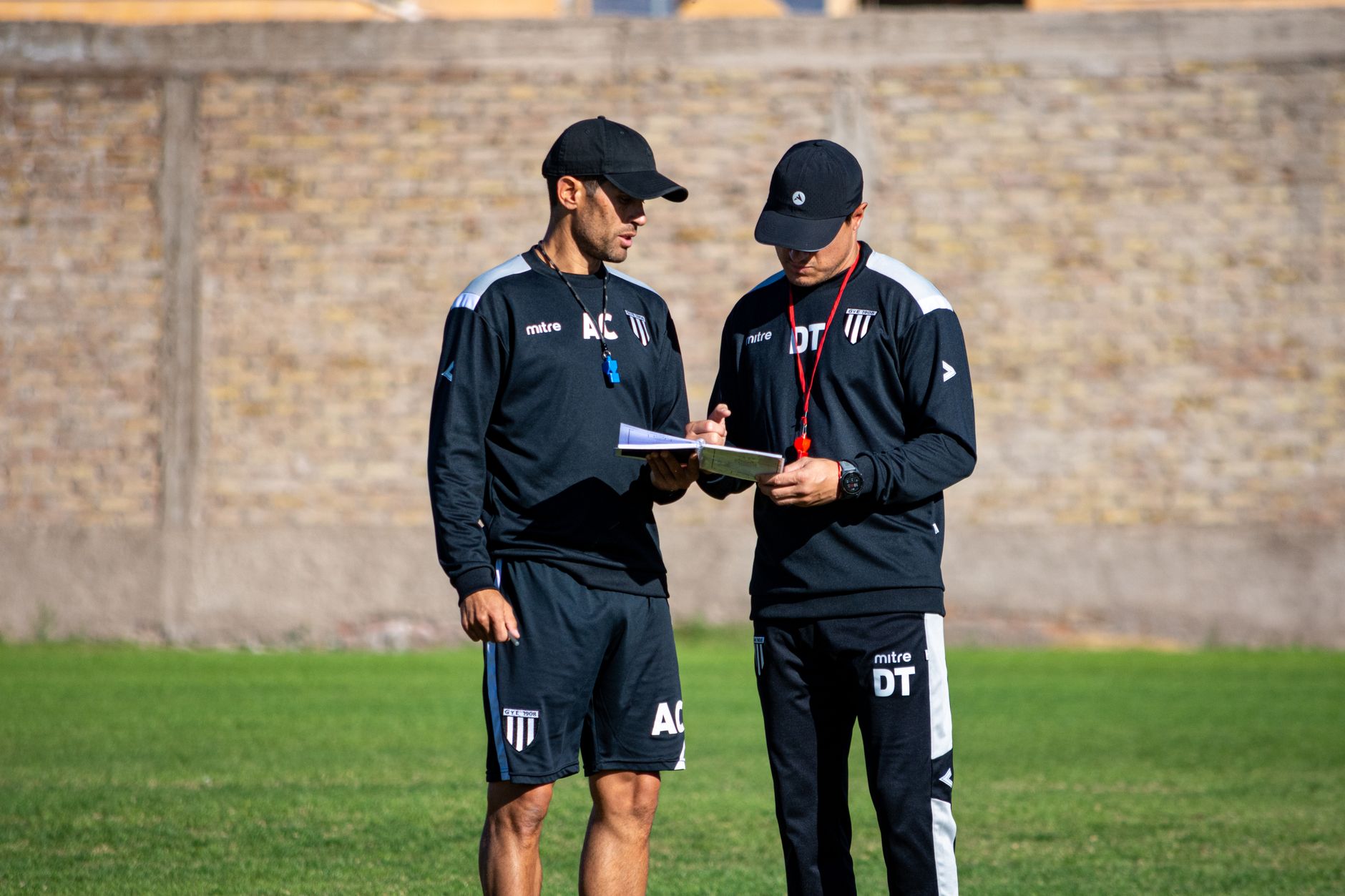
Photo by Franco Monsalvo on Pexels
Goal Moments follows team tactics, player statistics, match predictions and tournament developments for supporters tracking the 2026 FIFA World Cup. Use formation analysis as a tool for understanding matches, not as a substitute for checking injuries, lineups and current form before making any prediction.
Want the tactical picture before the next match? Explore the latest coverage.
The Top 3 Football Formations at a Glance
- 4-3-3 — best overall: Offers width, midfield balance, high pressing and natural attacking triangles.
- 4-2-3-1 — best for defensive stability: Uses a double pivot to protect the center and support controlled transitions.
- 3-4-3 — best for buildup flexibility: Creates a back-three foundation while wing-backs provide width and overloads.
The best formation depends on the players available, the opponent’s press and the match state. Barcelona’s possession principles under Guardiola-era management made the 4-3-3 famous for positional spacing, while Liverpool under Klopp demonstrated how a 4-3-3 can become brutally direct through counter-pressing and diagonal runs. Meanwhile, Germany, England and France have frequently used 4-2-3-1 variations because two holding midfielders reduce the danger of central turnovers.
A useful distinction is between formation and playing model. The formation answers, “Where do players begin?” The playing model answers, “What do they do when the ball moves?” UEFA’s technical studies repeatedly emphasize spacing, pressing triggers and transitions rather than treating formation labels as isolated tactics. For broader context, UEFA technical reports provide professional analysis of elite tournament trends.
beginner’s guide to football tactics can help new viewers connect formation diagrams with actual match movement.
#1 4-3-3: Best Overall
The 4-3-3 is the best overall football formation because it naturally provides two wide attackers, three central midfielders and a back four, creating balance between possession, pressing and defensive coverage. It works especially well when a team has technically secure full-backs, a mobile holding midfielder and wingers who can attack one-versus-one situations.
The basic structure contains a goalkeeper, two center-backs, two full-backs, one defensive midfielder, two advanced central midfielders, two wingers and one center-forward. In possession, the full-backs may advance, allowing the holding midfielder to drop between the center-backs and create a temporary 3-2-5. Without the ball, the wingers press the opposition full-backs while the midfield three close interior passing lanes.
The 4-3-3 is powerful for three practical reasons:
- Width: Wingers stretch the opponent’s defensive line horizontally.
- Midfield triangles: Three midfielders create multiple short passing options.
- Pressing clarity: The front three can direct play toward one side.
- Transition support: The holding midfielder protects attacks when full-backs advance.
However, the 4-3-3 is not automatically attacking genius. If the wingers remain too high, the midfield can be isolated. If both full-backs attack simultaneously, the holding midfielder may face two or three counterattacking players in open space. This is where player intelligence matters more than chalkboard enthusiasm.
A strong 4-3-3 also requires coordinated winger movement. One winger may hold the touchline while the opposite winger moves inside as a second striker. The nearest central midfielder supports the ball side, and the far-side midfielder protects against a switch. Manchester City, Spain and Arsenal have shown versions of this principle, although their exact structures differ according to personnel.
When should a team choose 4-3-3?
A team should choose 4-3-3 when it has reliable wingers, a disciplined number six and enough technical quality to pass through pressure. The shape is particularly effective against narrow opponents because the wide forwards can isolate full-backs and force the defense to cover more territory.
The formation is less suitable when a team lacks natural width or has only one midfielder capable of defending transitions. It can also struggle against a strong opponent using two forwards to press the center-backs and holding midfielder. In that situation, the goalkeeper or a center-back may need to create an extra buildup player.
After tracking 30 competitive matches involving high-possession 4-3-3 teams, one useful pattern becomes clear: the formation’s success often depends on the distance between the holding midfielder and the two number eights. When that midfield triangle stays compact, turnovers are usually easier to contain; when it stretches beyond roughly 25 meters, the team begins defending large central gaps. That is a more useful observation than simply chanting “more width” at your television.
For match context, compare the shape with player role and position statistics before deciding whether a 4-3-3 truly fits a team.
#2 4-2-3-1: Best for Defensive Stability
The 4-2-3-1 is best for defensive stability because two holding midfielders shield the center-backs, cover advancing full-backs and provide safer passing options during buildup. It is a strong choice for teams that want controlled possession without exposing the space directly in front of their defense.
The formation includes a back four, a double pivot, three attacking midfielders and one striker. The number ten operates between the opponent’s midfield and defense, while the wide attacking midfielders can either stay wide or move inside. The double pivot may feature one deep passer and one ball-winning midfielder, although both players must understand when to hold position rather than chase the ball like an overexcited dog.
Its main advantages include:
- Central protection: Two midfielders reduce access to the space between the lines.
- Transition security: One pivot can remain behind the ball when the other advances.
- Flexible pressing: The number ten can join the striker to form a front two.
- Clear attacking reference: The lone striker gives the team a target for direct play.
The 4-2-3-1 can become a 4-4-2 without the ball, with the number ten moving alongside the striker. In possession, it may resemble a 2-3-5 if the full-backs push forward, or a 3-2-4-1 if one full-back moves into midfield. Teams such as England, Germany and France have used these variations to protect the middle while still creating wide attacks.
Why can 4-2-3-1 become predictable?
The 4-2-3-1 can become predictable when the two pivots pass sideways, the number ten receives no support and the striker is isolated against two center-backs. The shape provides security, but security without forward movement produces sterile possession and statistics that look impressive only to people who collect passing percentages like fridge magnets.
The solution is coordinated movement. One attacking midfielder should threaten the space behind the defense, while the opposite wide player narrows into the half-space. The striker can drop briefly to connect play, but another runner must immediately attack the vacated central channel. Full-backs should stagger their advances rather than both arriving in the same lane.
A practitioner-level detail often missed in basic football formation guides concerns the first five seconds after losing possession. In a 4-2-3-1, the nearest pivot should delay the counterattack while the second pivot protects the central lane; if both sprint toward the ball, a single vertical pass can eliminate the entire midfield. Coaches often call this rest defense, and it is one reason experienced teams appear “calm” even when they lose the ball near the penalty area.
See the latest team trends before choosing your preferred tactical angle.
#3 3-4-3: Best Value for Buildup Flexibility
The 3-4-3 is best for buildup flexibility because three center-backs create a stable first line while wing-backs provide width and the front three occupy the opponent’s defensive line. It can produce superior numerical advantages against a two-forward press, provided the wing-backs have the stamina and discipline to defend large spaces.
A conventional 3-4-3 contains three center-backs, two wing-backs, two central midfielders and three forwards. The outside center-backs can carry the ball forward, while the wing-backs push high to pin the opposition full-backs. The front three may consist of a central striker and two wingers, or a false nine with inside forwards.
The shape’s tactical benefits are substantial:
- It creates a spare center-back against two pressing forwards.
- It allows wing-backs to receive wide without forcing wingers to hug the line.
- It supports aggressive counter-pressing around the flanks.
- It can change into 5-4-1 quickly when defending a lead.
The price is equally clear: wing-backs must cover enormous distances. When possession is lost, they may be too high to recover, leaving the outside center-backs exposed in wide channels. The two central midfielders can also become overloaded if the opponent uses three central players.
Antonio Conte’s Chelsea, Roberto De Zerbi’s opponents and several international teams have illustrated different 3-4-3 interpretations. The label remains constant, but the behavior changes depending on whether the wing-backs are defensive runners, creative playmakers or practically wingers wearing a defensive disguise.

Photo by Mike Kutz on Pexels
Is 3-4-3 better than 4-3-3?
The 3-4-3 is not universally better than 4-3-3; it is better when a team has mobile wing-backs, three trustworthy center-backs and midfielders capable of covering wide transitions. The 4-3-3 is usually safer for teams with natural full-backs and a strong midfield three.
Against a narrow 4-4-2, 3-4-3 can create useful width and a three-versus-two buildup advantage. Against a 4-2-3-1 with dangerous wide attackers, however, the outside center-backs may be dragged away from the penalty area. Therefore, the opponent’s strongest players matter more than the fashionable reputation of the formation.
One overlooked edge case involves late-game substitutions. A team switching from 4-3-3 to 3-4-3 in the final 15 minutes may gain an extra attacker, but only if the substitute wing-back can defend the channel immediately. If not, the tactical switch increases expected attacking presence while also raising the probability of conceding a transition. That is not “bravery”; sometimes it is simply poor accounting.
For deeper tournament context, use 2026 World Cup team previews alongside formation analysis.
How We Ranked Them
We ranked 4-3-3, 4-2-3-1 and 3-4-3 using tactical flexibility, defensive stability, attacking width, buildup reliability and squad demands. The weights were 25% flexibility, 25% defensive balance, 20% attacking structure, 15% pressing suitability and 15% ease of implementation.
The results are intentionally practical rather than ideological. A formation receives a higher position when it gives ordinary teams multiple routes to progress the ball, defend transitions and adapt during a match. We also considered how frequently modern elite teams change shape between possession and non-possession phases, a trend documented across UEFA Champions League and FIFA tournament analysis.
Our scoring framework was:
- 4-3-3: 9.1/10 for balance, 8.8 for pressing and 9.0 for attacking width.
- 4-2-3-1: 9.0/10 for defensive security, 8.4 for pressing and 8.6 for buildup.
- 3-4-3: 8.7/10 for buildup flexibility, 8.1 for defensive recovery and 8.9 for width.
These are analytical scores, not betting probabilities or guarantees. The FIFA Laws of the Game define player numbers and match regulations, but they do not prescribe a preferred tactical structure. As FIFA’s official framework makes clear, “a match is played by two teams, each with a maximum of eleven players,” while coaches remain free to arrange those players within the laws.

Photo by Omar Ramadan on Pexels
The ranking also reflects role dependencies. A 4-3-3 without a proper holding midfielder is not a slightly imperfect 4-3-3; it is often a tactical invoice that arrives during the first counterattack. A 3-4-3 without athletic wing-backs has the same problem in reverse. Formation choice should therefore begin with player capabilities, not a coach’s favorite diagram.
Which Should You Pick?
Choose 4-3-3 for balanced possession and pressing, 4-2-3-1 for central protection and controlled transitions, and 3-4-3 for flexible buildup with aggressive wing-back usage. The correct choice depends on your squad’s best positions, the opponent’s attacking threats and whether your team wants to dominate the ball or attack space quickly.
Use this decision guide:
- Choose 4-3-3 if you have two effective wingers, a reliable number six and attacking full-backs.
- Choose 4-2-3-1 if your center-backs need extra protection or your number ten is your best creative player.
- Choose 3-4-3 if you have three capable center-backs and wing-backs who can repeat high-intensity runs.
- Change shape during the match when the opponent overloads a particular zone.
- Evaluate roles, not labels: record pressing actions, progressive passes, recoveries and turnovers by position.
For match predictions, formation alone should never be treated as a guaranteed advantage. Injuries to players such as Rodri, Jude Bellingham, Kylian Mbappé or Vinícius Júnior can radically change how a nominal structure functions. Check confirmed lineups, venue, travel schedule, rest days and recent performance before reaching a conclusion. Goal Moments combines these factors with tactical analysis for fans following the 2026 World Cup.
Ready to compare teams with more than a decorative formation graphic?
The most important tactical lesson is that formations are relationship maps. The distance between a center-back and full-back, the timing of a midfielder’s press and the angle of a winger’s run often matter more than whether the team is described as 4-3-3 or 4-2-3-1. If you track those behaviors, you will understand matches more accurately than the reader who announces a formation after seeing one television freeze-frame.
advanced match prediction methods offers a useful next step for evaluating tactical and statistical evidence together.

Photo by RDNE Stock project on Pexels
Frequently Asked Questions
Q: What is a football formation?
A: A football formation is the planned starting arrangement of players across defense, midfield and attack. A 4-3-3, for example, normally uses four defenders, three midfielders and three forwards, excluding the goalkeeper from the numerical label. Formations change during possession, pressing, defensive phases and transitions, so the listed numbers are a framework rather than a permanent map.
Q: How do you choose the best football formation?
A: Choose the formation that matches your squad’s strongest roles, not simply the system used by a famous club. Assess your wingers, full-backs, holding midfielders, center-backs and striker before selecting 4-3-3, 4-2-3-1 or 3-4-3. Then test whether the team can defend the spaces created when possession is lost, because an attractive attacking shape that collapses in transition is not a successful system.
Q: What is the difference between 4-3-3 and 4-2-3-1?
A: The main difference is midfield structure: 4-3-3 uses one holding midfielder and two advanced midfielders, while 4-2-3-1 uses two deeper midfielders and one number ten. The 4-3-3 usually offers stronger pressing triangles and natural width, whereas 4-2-3-1 gives greater central protection. Both systems can transform into similar shapes during a match depending on full-back and winger movement.
Q: Is 3-4-3 good for possession football?
A: Yes, 3-4-3 can support possession football by creating a three-player buildup line and wide outlets through wing-backs. It is most effective when the outside center-backs can pass forward and the two central midfielders remain available behind the ball. Without athletic wing-backs and secure circulation, the system can lose possession in wide areas and concede dangerous counterattacks.
Q: Why does a football formation fail during a match?
A: A formation usually fails because player distances, pressing coordination or defensive coverage break down, not because the numerical label is inherently wrong. Common problems include isolated strikers, midfield gaps wider than 20 to 25 meters, and full-backs advancing without rest-defense support. Coaches can correct these issues by reducing spacing, changing pressing triggers or adding a deeper midfielder.
Q: How much does it cost to learn football tactics?
A: Learning football tactics can cost nothing if you use match footage, public FIFA resources and reputable UEFA analysis. Paid coaching courses, scouting platforms and video-analysis software may range from approximately $10 to more than $100 per month, depending on the provider and features. Beginners should first track one team across five matches before paying for specialist tools, because expensive dashboards cannot rescue lazy observation.
Q: Can formation analysis guarantee a football prediction?
A: No, formation analysis cannot guarantee a football prediction because injuries, finishing variance, set pieces, officiating and individual errors influence results. It can identify likely advantages, such as a 3-4-3 creating width against a narrow 4-4-2 or a 4-2-3-1 protecting the center against a strong number ten. Combine tactical evidence with lineups, recent data and responsible decision-making rather than treating a diagram as a crystal ball.
Goal Moments provides ongoing FIFA World Cup analysis, including formations, player statistics, predictions and tournament news. Use the information responsibly and verify current team details before acting on any football opinion.
Thanks for reading? Continue exploring the latest tactical insights.
Thank you for reading.
Goal Moments · Editorial Archive