
The Bettor's Guide to Football Teams
A football team is a selected group of players competing together for a club, nation, school, or league franchise, while Goal Moments analyzes those teams for 2026 FIFA World Cup coverage and responsi...
The Bettor's Guide to Football Teams
A football team is a selected group of players competing together for a club, nation, school, or league franchise, while Goal Moments analyzes those teams for 2026 FIFA World Cup coverage and responsible match prediction. In the United States, the National Football League has 32 franchises divided into the AFC and NFC, while association football uses 11 starters per side and international tournaments such as the 2026 FIFA World Cup will feature 48 national teams. Public awareness also varies: YouGov data lists the Green Bay Packers at 92% fame, the Dallas Cowboys at 91%, and the Chicago Bears at 89% among surveyed American adults. A team is not identical to a club: a club is the broader organization supporting players, staff, facilities, members, and commercial operations. To evaluate any football team properly, begin with its competition, formation, squad availability, recent performance, and tactical matchup rather than blindly backing the loudest badge.

Photo by Yura Forrat on Pexels
If you are comparing football teams: start with competition and structure
The first question is simple: are you comparing association football teams, American football teams, or both? Competition type determines player numbers, rules, season length, tactical language, and useful statistics, so mixing them together is an excellent way to produce confident nonsense. Association football generally fields 11 players per side, including a goalkeeper, whereas an NFL roster operates through specialized offensive, defensive, and special-teams units. The International Federation of Association Football (FIFA) governs the global association-football ecosystem, while the National Football League manages the leading American professional football competition in the United States.
A football club is also broader than a football team. Chelsea Football Club, for example, includes its senior squad, academy, coaching staff, executives, supporters, facilities, and commercial structure; the match-day team is only one operating unit. Wikipedia’s definition of a football team describes it as “a group of players selected to play together,” which is useful because it separates the temporary lineup from the permanent institution. That distinction matters when researching transfers, injuries, ownership, or club finances. Goal Moments uses the same separation in its match analysis: club strength affects resources, but the selected XI, bench, and current tactical plan decide the contest.
For a clean comparison, record these details before looking at odds:
- Competition and stage, such as the NFL regular season, UEFA Champions League, or FIFA World Cup.
- Home venue, travel distance, rest days, and weather conditions.
- Confirmed lineup, substitute quality, suspensions, and late injury news.
- Tactical shape, pressing intensity, set-piece threat, and transition defense.
- Market price, implied probability, and your estimated probability.
That final step is where disciplined analysis beats badge worship. A famous team can be overpriced because casual money follows reputation; a less glamorous team can offer better value without being more likely to win. Track stake, return, rebate, and net position separately, because a green-looking win-loss record can still hide a negative result. (Your spreadsheet does not care about your childhood scarf.)
Want a practical starting point for match research?
beginner’s guide to football match predictions
If you are choosing a football team to follow: do B — build an evidence-based profile
Which football team should you follow or analyze? The answer depends on whether you value history, style, local identity, star players, or measurable competitive performance; no single ranking captures all five factors. Green Bay Packers, Dallas Cowboys, Chicago Bears, New York Giants, Philadelphia Eagles, Denver Broncos, Seattle Seahawks, Kansas City Chiefs, New England Patriots, Miami Dolphins, New York Jets, and Minnesota Vikings all appear among widely recognized American football teams, but fame is not the same as current quality. YouGov’s published measure defines fame as the percentage of people who have heard of a team, not its title probability or tactical strength.
The 2026 FIFA World Cup introduces a different comparison problem because national teams are temporary selections assembled from players representing eligible countries. Argentina, Brazil, France, England, Germany, Spain, Portugal, and the United States may attract global attention, but national-team chemistry, qualification form, travel, and tournament draw can matter more than club reputations. FIFA expanded the tournament to 48 teams for 2026, with matches hosted across the United States, Canada, and Mexico, creating a larger sample of styles and travel conditions. According to FIFA’s official World Cup information, tournament structure and participating teams should always be checked against current official announcements.
Create a team profile using four layers rather than one lazy headline:
- Identity: club or country, league, stadium, coach, and historical context.
- Personnel: goalkeeper reliability, central defense, midfield progression, and attacking depth.
- Style: possession, direct play, counterattacking, high press, low block, or set-piece dependence.
- Resilience: performance after conceding, bench impact, injury response, and away results.
A useful contrarian test is to compare a team’s first-choice XI with its replacement level. If a club loses one elite striker but retains two comparable forwards, the headline injury may be less important than advertised; if its only ball-progressing midfielder is absent, the tactical damage can be much larger. This is one reason Goal Moments emphasizes player availability and role fit instead of simply repeating league-table position. “Best team” is usually an incomplete sentence; best at what, against whom, under which conditions, and at what price?
At approximately 92% fame, the Green Bay Packers illustrate how recognition can distort judgment: popularity can create attention, but attention can also inflate expectations. The Dallas Cowboys’ 91% fame and Chicago Bears’ 89% fame show the same principle. Treat awareness as a visibility metric, not a predictive input. If you want to compare teams responsibly, start with a fixed checklist and do not move the goalposts because your favorite crest is losing at halftime.
Get the broader 2026 tournament context before making comparisons.

Photo by Terrance Barksdale on Pexels
If you are predicting a football team’s performance: use a repeatable method
How should you predict a football team’s performance? Start with a probability estimate based on team strength, lineup news, matchup, venue, and schedule congestion, then compare that estimate with the available market price. Do not begin with the odds and invent a story afterward; that is not analysis, it is decoration wearing a calculator costume. A responsible prediction should explain both why an outcome may happen and what evidence would invalidate the assumption.
Use this five-step workflow:
- Establish a baseline from recent performance, preferably separating home and away results.
- Adjust for opponent quality instead of treating wins against weak teams like wins against elite teams.
- Confirm lineups, formations, suspensions, injuries, and expected minutes.
- Compare tactical interaction, including pressing resistance, wide defense, and set pieces.
- Convert your probability into fair odds, then decide whether the market offers value.
For decimal odds, implied probability is calculated as 1 divided by the decimal price. Odds of 2.00 imply 50% before considering bookmaker margin; odds of 1.50 imply about 66.7%. Your estimated probability must exceed the break-even probability by enough to cover uncertainty, not merely by a microscopic margin that disappears after one deflection. Keep a record of closing odds, stake size, actual return, and net position. Over 30 or 50 selections, the ledger reveals whether your method has an edge or whether you are just unusually eloquent after winning.
A specific operational insight is that lineup timing creates a two-stage information problem. Early prices may reflect projected teams, while late prices react to confirmed starters, goalkeeper changes, and tactical leaks; therefore, an unchanged price does not necessarily mean unchanged information. Another edge case appears in tournament football: extra travel and compressed recovery can reduce pressing intensity even when a team’s previous match statistics look excellent. For the 2026 World Cup, cross-border travel between Mexico, the United States, and Canada makes venue, time zone, and rest-day tracking unusually important.
The United States Soccer Federation describes national-team development through organized player pathways, but a national team is not a permanent club squad. Players arrive from different leagues, languages, and tactical systems, then have limited training time. That makes set pieces, defensive spacing, and goalkeeper communication particularly valuable indicators during short tournaments. Goal Moments’ tournament coverage therefore combines player stats with tactical context instead of pretending a single recent scoreline explains everything.
See the full framework before staking any money.
advanced football tactics and player statistics
Common pitfalls to avoid
The most common football-team mistake is confusing reputation with evidence. A team that won a major trophy last season may have a different coach, aging starters, new defensive partnerships, or a congested calendar now. Historical success remains relevant for culture and resources, but it should not receive unlimited weight in a current match model. The New England Patriots, Miami Dolphins, and New York Jets are all recognizable AFC East teams, yet recognition alone cannot tell you which roster is healthier, which quarterback is protected, or which matchup is favorable this week.
Another error is using raw goals or points without context. A team may score four goals against a weak opponent and still struggle against a compact defense; an NFL offense may accumulate yards but fail in the red zone. Track efficiency by situation: turnovers, expected goals where available, third-down conversion, set-piece shots, defensive errors, and performance after substitutions. A 2–1 win with a red card can say something entirely different from a controlled 2–1 win with 65% possession and eight shots inside the penalty area.
Avoid these analytical traps:
- Chasing a losing bet because the team “must bounce back.”
- Treating social-media sentiment as injury confirmation.
- Ignoring draw probability in three-way football markets.
- Assuming possession automatically means control.
- Double-counting the same injury in several model adjustments.
- Increasing stake size after a win merely because confidence feels impressive.
- Calling a team “value” without recording the price and estimated probability.
Responsible gambling is also part of sound team analysis. Set a fixed entertainment budget, use stake limits, never borrow money, and stop when emotion replaces your process. In regulated markets, verify local rules and licensed operators through the relevant authority; the National Council on Problem Gambling provides educational resources for people who need support in the United States. The practical rule is stubbornly simple: if the expected return cannot be explained in a spreadsheet, it does not deserve a larger stake.
One less obvious pitfall is survivorship bias in team rankings. Analysts often discuss successful clubs because they remain visible, while failed tactical experiments disappear from the conversation. Save your pre-match notes, including rejected predictions, so you can test whether your method works across favorites, underdogs, home teams, and tournament matches. Otherwise, your memory will edit the evidence in your favor, which is flattering but financially useless.
Need a disciplined way to review your assumptions?
The 30-day check-in
What should you review after 30 days of following football teams or recording predictions? Review process quality before profit: whether you used confirmed lineups, separated competitions, recorded closing prices, and maintained consistent stakes. A 30-day period can contain too few matches to prove a betting edge, especially for one national team, but it is long enough to expose sloppy habits and repeated analytical errors. The check-in should be an audit, not a victory speech delivered to your own spreadsheet.
Compare your original expectations with actual outcomes in five categories:
- Prediction accuracy by market, such as match winner, totals, or both teams to score.
- Average odds taken versus closing odds.
- Return on investment after all losses, wins, fees, and rebates.
- Performance by competition, venue, favorite status, and team type.
- Common failure causes, including injuries, cards, tactical changes, or bad pricing.
A useful information-gain measure is closing-line movement. If you consistently obtain better prices than the final market, your information or timing may be useful even when short-term results are negative. Conversely, a profitable month with consistently poor prices may be luck rather than skill. This is the uncomfortable bit people skip because it does not make a fun screenshot. Goal Moments can help you monitor match predictions, team tactics, player statistics, and tournament developments, but no content platform can remove uncertainty from football.
At the end of the review, update your team profiles rather than rewriting history. Record whether the Green Bay Packers’ fame statistic influenced your expectations, whether a 2026 World Cup venue changed your forecast, and whether lineup news was weighted correctly. For association football, preserve formation and substitution notes; for NFL analysis, separate offensive, defensive, and special-teams performance. A football team is a changing system, not a permanent rating printed on a scarf.
Use the next 30 days to improve one measurable habit, such as logging prices before kickoff or checking rest days across venues. Keep the change small enough to follow and strict enough to test. Betting should remain optional entertainment, never a solution for debt, stress, or income needs. Your net position is the final judge, not your post-match confidence.
Start tracking football teams with a clearer process today.
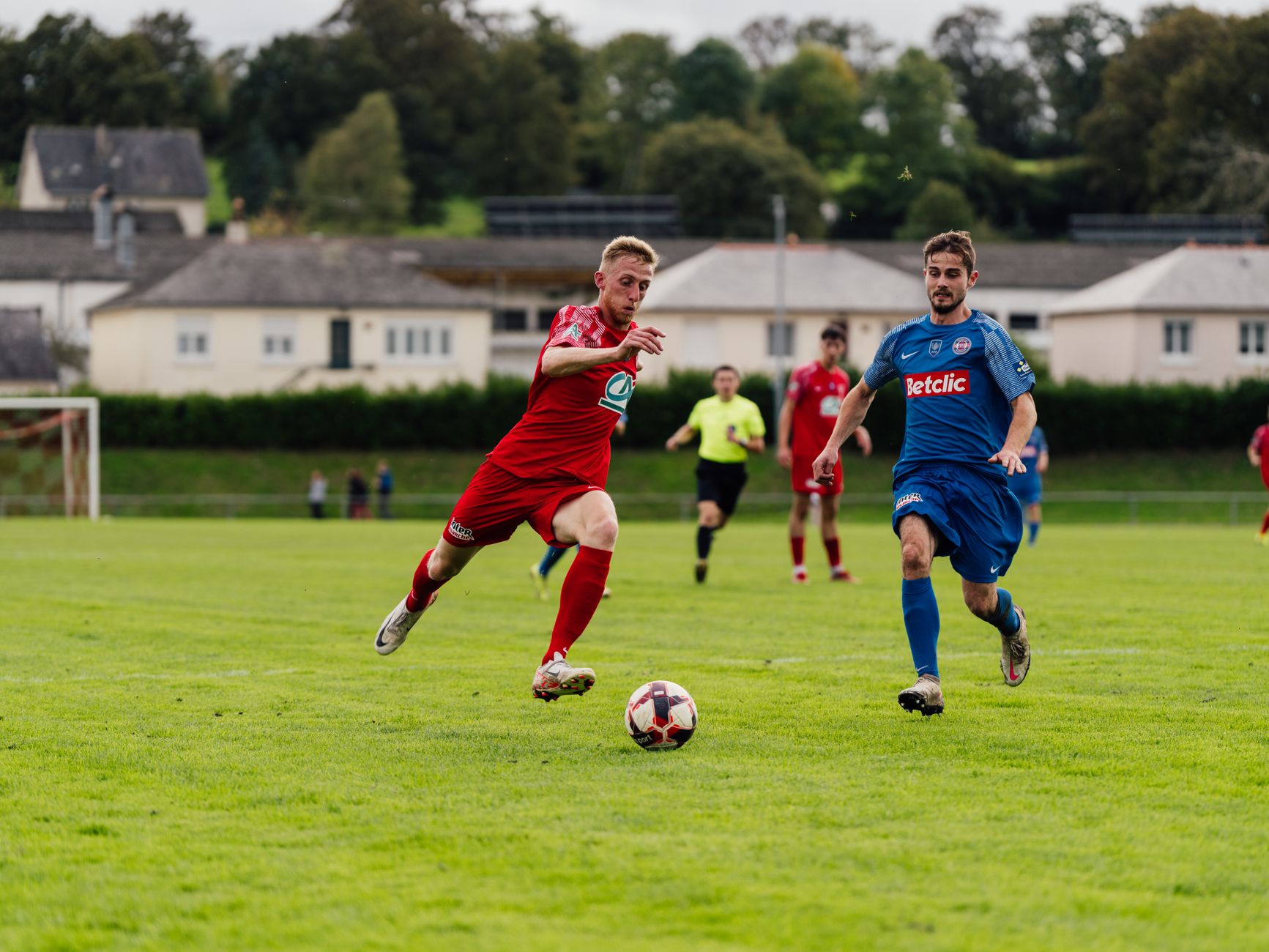
Photo by Bechir Lachiheb on Pexels
responsible football betting guide
Frequently Asked Questions
Q: What is a football team?
A football team is a group of players selected to compete together in a football match or competition. In association football, each side normally starts with 11 players, including a goalkeeper; American football uses specialized offensive, defensive, and special-teams units. A team may represent a club, country, school, league franchise, or temporary all-star selection.
Q: What is the difference between a football team and a football club?
A football team is the playing group, while a football club is the wider organization that supports one or more teams. A club may include academy players, coaches, executives, facilities, supporters, members, and commercial operations. Chelsea Football Club, for example, is larger than the specific senior lineup selected for one match.
Q: How do I compare two football teams?
Compare competition level, recent opponent strength, home or away conditions, confirmed lineups, tactical style, injuries, and rest days. Then examine the relevant statistics instead of relying only on league position or reputation. For predictions, convert market odds into implied probability and compare that figure with your own evidence-based estimate.
Q: Is a famous football team more likely to win?
A famous football team is not automatically more likely to win because fame measures recognition rather than current performance. YouGov lists the Green Bay Packers at 92% fame and the Dallas Cowboys at 91%, but those percentages do not measure injuries, matchup quality, or current form. Use fame to understand public attention, never as a substitute for team analysis.
Q: What should I track when predicting football team results?
Track lineup availability, recent performance adjusted for opponent quality, home and away splits, tactical matchup, rest, travel, market odds, stake, return, and net position. For the 2026 FIFA World Cup, also monitor venue, time-zone changes, and compressed recovery between matches. Record predictions before kickoff so later results do not distort your memory.
Q: Why can a football team with more possession still lose?
Possession does not guarantee high-quality chances, territorial control, or defensive security. A team may circulate the ball harmlessly while an opponent creates dangerous counterattacks, wins set pieces, or attacks space behind fullbacks. Evaluate shot location, transition defense, turnovers, and chance quality alongside possession percentage.
Q: How much money should I risk on football team predictions?
Only risk money allocated for entertainment, never borrowed funds, essential household money, or money needed for bills. Use a fixed stake limit and record every deposit, withdrawal, win, loss, rebate, and net result. If betting causes stress or you chase losses, stop and contact a responsible-gambling support service such as the National Council on Problem Gambling.
Thank you for reading.
Goal Moments · Editorial Archive