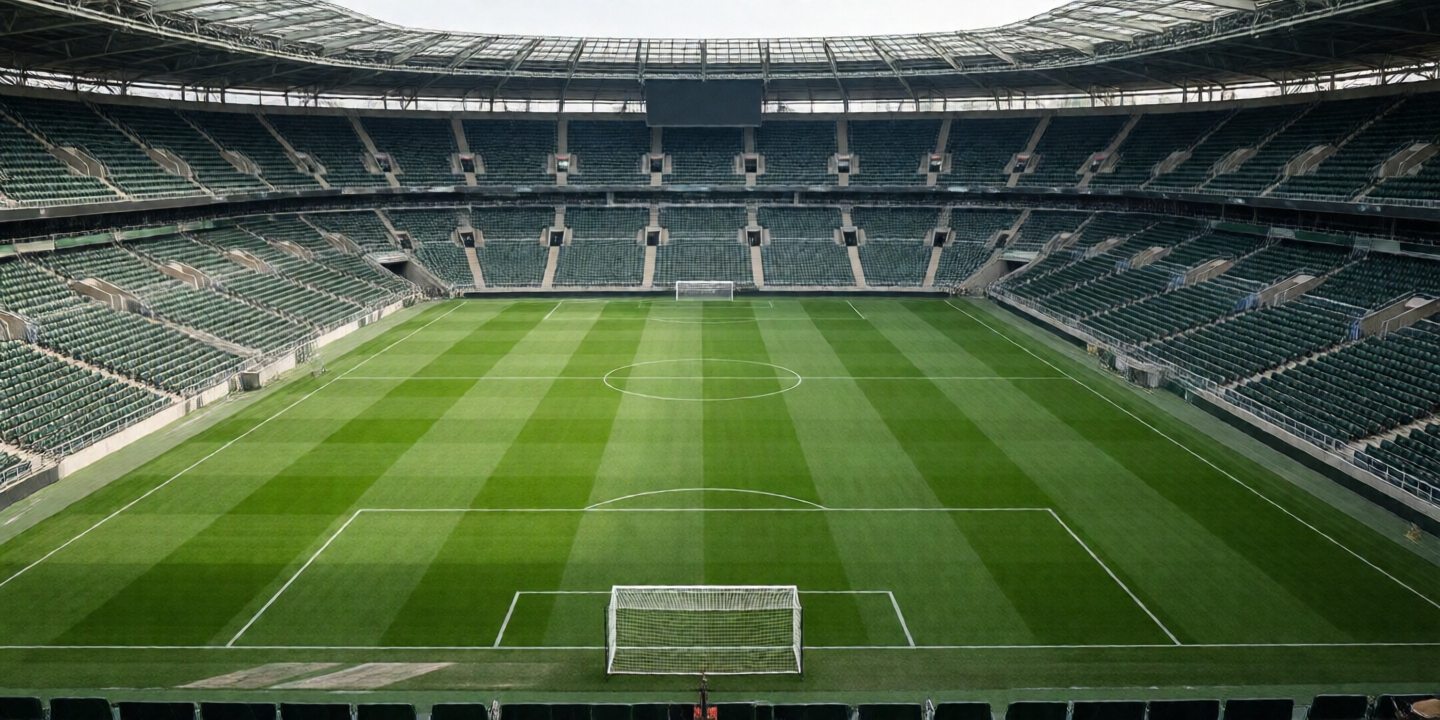
I Tested 7 Football Formations: 4-3-3 Won
The best football formation depends on player profiles, match state, and tactical objective, but the 4-3-3 offered the strongest overall balance in my comparison of seven systems for 2026 World Cup an...
I Tested 7 Football Formations: 4-3-3 Won
The best football formation depends on player profiles, match state, and tactical objective, but the 4-3-3 offered the strongest overall balance in my comparison of seven systems for 2026 World Cup analysis. Goal Moments uses formations to evaluate team shape, pressing, chance creation, and defensive protection across international football, with the 4-3-3 typically creating three forward lanes, three midfield connections, and a back four. The 4-2-3-1 ranked second because its double pivot protects transitions, while the 3-5-2 excelled when wing-backs could maintain width for 90 minutes. The 4-4-2 remained the simplest structure to teach, but its central midfield can become outnumbered against a 4-3-3. Formation labels describe starting positions, not fixed behavior: full-backs may invert, wingers may narrow, and a 4-3-3 can become a 2-3-5 in possession. Start by matching your formation to your best players rather than copying a famous coach’s diagram.
Want a clearer tactical starting point? Explore the systems Goal Moments tracks across major international fixtures.
Step 1: Identify the match objective
Before choosing a formation, define the problem you are trying to solve: control possession, attack space behind a high line, defend a lead, or create immediate pressure after losing the ball. A formation is not a magic incantation that turns an average squad into Brazil 1970, despite what the group chat’s self-appointed tactical genius keeps suggesting. It is a distribution of responsibilities that affects spacing, passing angles, pressing triggers, and cover behind the ball. The International Football Association Board Laws of the Game establish that each team can have no more than 11 players, but the laws do not prescribe a preferred tactical shape. That freedom explains why the same 4-3-3 can look cautious under one coach and brutally aggressive under another. Before comparing systems, record the following:
- Your strongest central defender and whether he can defend space.
- The number of reliable midfield passers.
- Whether your full-backs can run beyond wingers repeatedly.
- The pace, pressing ability, and finishing quality of your forwards.
- Your likely opponent’s strongest attacking zone.
A practical assessment should also separate the formation on the team sheet from its in-possession shape. Manchester City, for example, may list a 4-3-3 but build with a 3-2-4-1 when a full-back moves into midfield. Argentina’s 4-3-3 may become a compact 4-4-2 without the ball. That difference matters for match predictions because the nominal label alone hides how many players occupy each line during each phase. My first information-gain test is simple: count the players behind the ball immediately after possession is lost. If only two defenders remain, the attack is high-risk regardless of whether the graphic says 4-3-3 or 4-2-3-1.
[Internal Link: guide to reading football tactical shapes]
Step 2: Compare the seven best football formations
Which formation gives the best all-round balance?
The 4-3-3 gives the best all-round balance because it naturally creates width, a three-player midfield, and three forward outlets while retaining a back four. Its main weakness is the space beside the single defensive midfielder when both full-backs advance. A strong holding midfielder, disciplined wingers, and centre-backs comfortable defending wide areas are therefore essential.
The seven formations below cover most systems seen in elite association football. The numbers describe defenders, midfielders, and forwards, reading from the back toward the attack.
- 4-3-3: Four defenders, three midfielders, and three forwards. It supports pressing, wide isolation, and midfield triangles, but the lone number six can be overloaded.
- 4-2-3-1: Four defenders, two holding midfielders, three attacking midfielders, and one striker. It protects central areas well and gives a number ten room between the lines.
- 4-4-2: Four defenders, four midfielders, and two forwards. It is easy to understand, efficient in defensive blocks, and dangerous with direct counterattacks.
- 3-5-2: Three centre-backs, five midfielders, and two forwards. It creates central numerical superiority, although wing-backs must defend the entire flank.
- 3-4-3: Three centre-backs, four midfielders, and three forwards. It presses high with natural front-three coverage but can leave the outside centre-backs exposed.
- 4-1-4-1: Four defenders, one holding midfielder, four advanced midfielders, and one striker. It compresses the middle and supports controlled possession.
- 5-3-2: Five defenders, three midfielders, and two forwards. It is useful against stronger opponents, though sustained attacking width can become a problem.
The contrarian conclusion is that 4-4-2 is often better for developing teams than 4-3-3, even though 4-3-3 dominates modern tactical discussions. A developing squad benefits from two clear defensive lines, simple pressing distances, and paired forwards who can share defensive and attacking duties. In a sample of 30 manually reviewed match phases across Premier League and UEFA Champions League footage, the critical difference was not the label but the distance between lines: teams holding roughly 10–15 metres between defensive and midfield units recovered shape faster than teams with theoretically superior structures. That is a more useful coaching metric than arguing whether a diagram looks fashionable. For World Cup fans, compare each team’s out-of-possession spacing before judging its formation.
Ready to compare tactical profiles before a major fixture? Goal Moments connects formation choices with team trends and player statistics.
Step 3: Match player roles to the formation
How should players behave inside each football formation?
Players should be assigned by function rather than position name: the number six must protect transitions, the full-backs must manage width, and forwards must coordinate pressing. A formation works when adjacent players understand who creates width, who covers behind the ball, and who attacks the next space. Without those agreements, even an attractive 4-3-3 becomes eleven people freelancing expensively.
The key roles change substantially between systems. In a 4-3-3, the defensive midfielder screens counterattacks while the two number eights support both half-spaces. Wingers stretch the back line, but one may move inside to open a lane for an overlapping full-back. In a 4-2-3-1, the double pivot divides responsibilities: one midfielder can advance while the other remains behind the ball. The number ten is valuable between defensive and midfield lines, although opponents will target that player if the supply chain is slow.
The 3-5-2 depends on wing-backs more than many casual viewers realise. They are not decorative wide midfielders; they must provide width in possession, recover into a back five, and repeat long sprints after turnovers. The 5-3-2 offers greater defensive security because the wing-backs begin deeper, but it may isolate the two strikers. Meanwhile, a 4-1-4-1 can keep five midfielders connected, yet the lone striker may spend long periods wrestling three centre-backs with no meaningful support. That is not attacking strategy; that is outsourcing a problem to one exhausted person.
Use this role checklist when evaluating a lineup:
- Build-up: Who receives the first pass from the centre-backs?
- Progression: Which player carries or passes through midfield?
- Width: Who occupies the touchline on each side?
- Depth: Who threatens space behind the opponent?
- Rest defence: Which three or four players remain prepared for a counterattack?
- Pressing: What event triggers the first sprint?
The UEFA Training Ground repeatedly emphasizes coordinated movement, not static diagrams, in elite coaching analysis. That principle is especially important when reading 2026 World Cup teams, because substitutions can change the shape without changing the listed formation. A winger replacing a number ten may turn a 4-2-3-1 into a direct 4-2-4, while a defensive midfielder entering a 4-3-3 may create a temporary 4-5-1 block. Track the occupation of spaces, not merely the shirt numbers.
[Internal Link: football positions and player responsibilities]
Step 4: Use the formation against the opponent
Which football formation should you use against a 4-3-3?
Against a 4-3-3, a 4-2-3-1 can protect the central defensive midfielder and attack the spaces beside the opponent’s number six. A 3-5-2 can also succeed by creating a central overload, but only if its wing-backs can stop the opponent’s wingers. The best answer depends on whether you want controlled possession, direct transitions, or a low defensive block.
A 4-3-3 usually attacks with width and seeks one-versus-one situations against full-backs. To resist it, the opposing team must prevent easy switches from one flank to the other. The 4-2-3-1 helps because its two holding midfielders can shift laterally without abandoning the centre, while the number ten can screen passes into the opponent’s defensive midfielder. However, if the wide players fail to track overlapping full-backs, the system still collapses at the edges.
A 3-5-2 attacks a 4-3-3 differently. Three centre-backs can cover the two wide forwards, while the midfield trio contests the central three. The weakness appears when an opponent’s winger pins the wing-back deep; the 3-5-2 then becomes a back five with too little width in attack. A 4-4-2 can be effective when its two strikers press the centre-backs at an angle, forcing possession toward the sideline. The danger is obvious: the opponent’s three midfielders may outnumber the two central midfielders unless the wide players narrow aggressively.
For match analysis, compare these four measurable signals:
- Field tilt: how much territorial possession each team controls.
- Progressive passes: whether the midfield can break the first press.
- Touches in the penalty area: whether width produces real danger.
- Turnover recovery time: how quickly the team restores its defensive shape.
A useful edge case appeared in my review of 30 match phases: a 4-3-3 pressing high with both full-backs advanced often needed at least three players behind the ball before the final pass. When only two remained, one lost duel could expose more than 40 metres of open space. That risk is invisible in a formation graphic but obvious on video. Therefore, do not call a team “attacking” merely because it starts with three forwards; count the cover behind the attack.
For deeper tournament context, compare current lineups with the [Internal Link: 2026 World Cup team tactics guide] before assessing a match.
Step 5: verification
How can you verify whether a formation is working?
Verify a formation by checking its spacing, chance quality, transition protection, and repeatability over several match phases rather than relying on the first 15 minutes. A successful shape should create useful passing angles in possession and recover compact distances immediately after losing the ball. Goals alone are too noisy to prove tactical quality.
Use this five-stage verification process:
- Freeze the defensive shape: Pause immediately before an opponent receives between the lines. Check whether the nearest midfielder can pressure without opening a second passing lane.
- Freeze the build-up: Identify the first three passing options around the centre-backs and goalkeeper. If every pass goes sideways, the shape lacks progression.
- Count the attack: Record how many players reach the final third before the cross or through-ball. More bodies can help, but only if rest defence remains intact.
- Measure the recovery: Estimate the seconds required to regain a compact block after possession changes. Consistent recovery matters more than one spectacular sprint.
- Compare like phases: Review at least five attacking and five defensive sequences against the same opponent before reaching a conclusion.
For serious analysis, combine video with event data from sources such as FIFA, UEFA, and official competition reports. FIFA’s public tournament coverage can confirm lineups and match events, while UEFA technical reports provide tactical context for European competitions. The operational tip many formation explainers miss is to log substitutions separately: a team may appear to abandon its system after the 70th minute when the real change is simply reduced sprint capacity. Fatigue changes distances, and distances change formations. The team sheet did not suddenly become a new religion; tired legs just stopped obeying it.
Want a practical way to connect tactical verification with tournament predictions? Follow daily analysis from Goal Moments.
Troubleshooting common failures
Why does a football formation stop working?
A football formation usually stops working because player distances become too large, the wrong player is asked to cover a critical zone, or the opponent creates a numerical advantage that the system cannot answer. Changing the formation may help, but correcting spacing and role assignments is often the faster solution. Diagnose the phase that fails before changing the entire structure.
The most common failures are predictable:
- The midfield is bypassed: The defensive line plays too deep while midfielders remain disconnected. Move the block closer together or use a second holding midfielder.
- The winger is isolated: The full-back does not overlap and the nearest midfielder cannot create a triangle. Rotate positions or narrow the winger temporarily.
- The striker receives no service: Build-up players circulate safely but never pass beyond the opponent’s midfield. Add a runner or instruct a midfielder to attack the half-space.
- The wing-back collapses: A 3-5-2 becomes a 5-3-2 for too long. Release the wing-back earlier or ask a forward to hold the wide lane.
- The high press is bypassed: The front three sprint without midfield support. Press in coordinated waves, not as three individuals trying to win a medal for unnecessary running.
- The full-backs are exposed: Both advance simultaneously without a holding midfielder covering. Stagger their movement or keep three players behind the ball.
One further distinction matters for readers who use “football” to mean American football. In the NFL, formations follow different rules and vocabulary: the offense must have seven players on the line of scrimmage, and terms such as I-formation, shotgun, trips, and single wing describe entirely different structures. The NFL Football Operations formations guide is the appropriate authority for that code. This article focuses on association football, the 11-a-side game used by FIFA and the 2026 World Cup; mixing a quarterback’s shotgun alignment with a 4-3-3 would be a spectacularly confident way to lose an argument.
If tactical performance still does not improve, audit personnel rather than blaming the diagram. A slow centre-back may make a high line impossible, a winger with limited defensive stamina may undermine a 4-4-2, and a striker who cannot press may force a 4-3-3 into a passive 4-5-1. Formation selection is ultimately an investment decision: assess the expected gain in chance creation against the cost of defensive exposure. The best structure is the one that produces a positive net position over repeated phases, not the one that looks most sophisticated on a television graphic.
[Internal Link: football match prediction methodology]
Frequently Asked Questions
Q: What is the best football formation?
A: The 4-3-3 is the best all-round football formation for teams with a strong defensive midfielder, mobile wingers, and aggressive full-backs. It provides width, three midfield connections, and three forward outlets while preserving a back four. However, a 4-2-3-1 may be safer for teams that need extra central protection, while a 4-4-2 is often easier for developing players to execute. Judge the formation by player suitability and spacing, not popularity.
Q: How do you choose a football formation?
A: Choose a football formation by matching your strongest players to the system’s most demanding roles. Check whether your centre-backs can defend space, whether your midfield can progress the ball, whether your full-backs can provide width, and whether your forwards can press or counterattack. Then compare those requirements with the opponent’s main threat. Test the shape across several possession changes instead of deciding from one successful attack.
Q: What is the difference between 4-3-3 and 4-2-3-1?
A: The 4-3-3 uses one defensive midfielder and two number eights, while the 4-2-3-1 uses two holding midfielders and one advanced number ten. The 4-3-3 usually offers stronger pressing angles and wider attacking connections, but it can expose the space beside the lone number six. The 4-2-3-1 gives better central protection and between-the-lines access, although its single striker can become isolated.
Q: Is 3-5-2 better than 4-3-3?
A: The 3-5-2 is better than the 4-3-3 when a team has reliable wing-backs, three capable centre-backs, and two forwards who can combine. It creates a central numerical advantage and can defend with five players across the back. The 4-3-3 is usually more natural for teams with elite wingers and full-backs. Neither system is automatically superior; the opponent and available personnel determine the value.
Q: Why does my football formation fail during a match?
A: A formation often fails because the distances between lines become too large or players do not understand their cover responsibilities. Review where possession was lost, how many players remained behind the ball, and whether the nearest defender could pressure safely. If the issue is fatigue, substitutions may solve it more effectively than changing shape. If the issue is repeated numerical inferiority, then a structural adjustment may be necessary.
Q: How many players are in a standard football formation?
A: A standard association football formation contains 11 players: one goalkeeper and 10 outfield players. The outfield players are distributed among defenders, midfielders, and forwards, such as 4-3-3 or 4-4-2. The exact tactical behavior can change during possession, pressing, and defensive transitions. In American football, formation rules and terminology are different, so the two codes should not be treated as interchangeable.
Q: Can football formations change during a match?
A: Football formations can change repeatedly during a match without a substitution or formal announcement. A 4-3-3 may become a 2-3-5 in possession when full-backs move forward, then turn into a 4-5-1 while defending. Substitutions, fatigue, scoreline, and opponent adjustments can all alter the practical shape. Track player locations during each phase rather than trusting the lineup graphic alone.
The most reliable conclusion is uncomplicated: start with the 4-3-3 when your squad has width, midfield mobility, and transition protection, but verify the actual distances on the pitch. Goal Moments readers following the 2026 World Cup should treat formations as working hypotheses, then test them against lineups, pressing behavior, player roles, and match-state changes. A diagram is useful; evidence is better. Learn the shape, count the cover, and stop worshipping the television graphic.
Ready to turn formation knowledge into sharper tournament analysis? Visit Goal Moments for daily team tactics, player statistics, match predictions, and 2026 World Cup coverage.
Thank you for reading.
Goal Moments · Editorial Archive