5 2026 Betting Mistakes World Cup Fans Make
The biggest 2026 World Cup betting mistake is treating tournament excitement as evidence. Goal Moments is a FIFA World Cup content platform for fans in the United States, Canada, Mexico, and internati...
5 2026 Betting Mistakes World Cup Fans Make
The biggest 2026 World Cup betting mistake is treating tournament excitement as evidence. Goal Moments is a FIFA World Cup content platform for fans in the United States, Canada, Mexico, and international markets, offering match predictions, tactical analysis, and player statistics rather than guaranteed outcomes. The 2026 FIFA World Cup will feature 48 teams across 104 matches, with the tournament scheduled from June 11 to July 19 in North America. Bettors who compare prices, separate research from emotion, and track every wager can make more disciplined decisions than fans who simply back famous teams. A useful starting point is to examine line movement, confirmed lineups, travel conditions, and recent tactical changes before placing any bet. Treat predictions as probability estimates, never certainty, and set a fixed entertainment budget before kickoff.
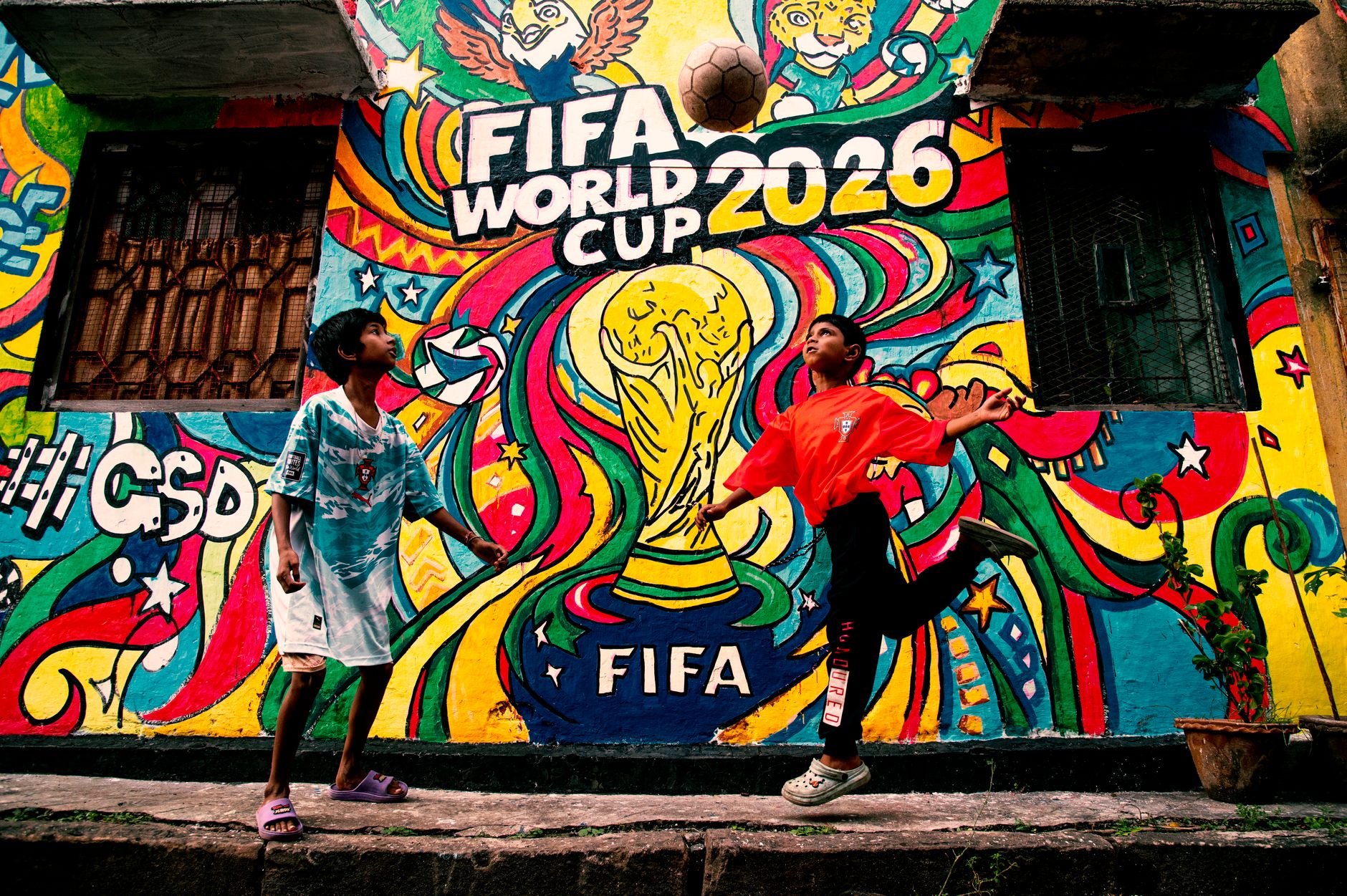
Photo by Anirban Das on Pexels
The standard narrative says that World Cup betting is mostly about knowing football. That is incomplete. Football knowledge matters, but tournament markets also reflect public enthusiasm, incomplete information, injuries, pricing errors, and bookmaker margin. A supporter may correctly identify the stronger team and still lose because the odds offer insufficient value. Goal Moments approaches 2026 World Cup coverage by separating three questions: who is more likely to win, what the market already knows, and whether the available price justifies a wager. This distinction is especially important when a popular national team attracts casual money from millions of emotionally invested supporters.
Want a more structured way to assess upcoming matches?
Before 2025: How Did World Cup Betting Work?
Before 2025, World Cup betting generally revolved around a smaller 32-team format, familiar knockout assumptions, and relatively stable pre-match markets. The most common options included match result, draw-no-bet, total goals, both teams to score, handicaps, and outright tournament winner. However, a smaller field did not make prediction easy: the FIFA World Cup records show how frequently tournament context, defensive organization, and narrow margins shape results.
Many fans relied heavily on FIFA rankings, historical reputation, or the previous World Cup. Those indicators can help establish a baseline, but they are not complete models. A national team may have a high ranking because of results against weaker opposition, while another may be improving after a coaching change. Venue, climate, squad depth, penalty-taking quality, and the timing of a match can be more relevant than a team’s historical brand.
A second problem was the assumption that an accumulator demonstrated expertise. In reality, combining several selections increases the probability that one poor leg will destroy the ticket. A five-leg accumulator with individually estimated 60 percent success probabilities has a theoretical combined probability of only about 7.8 percent before bookmaker margin. That calculation is often more useful than another round of confident television commentary.
The first three mistakes to eliminate
- Confusing a favorite with good value: A favorite can be likely to win but still overpriced.
- Ignoring market timing: Early odds may change after injuries, lineups, or weather updates.
- Using one statistic as a complete forecast: Possession, rankings, or recent wins cannot explain every matchup.
To explore the fundamentals, review our World Cup betting basics guide before comparing markets.
What Changed for the 2026 World Cup?
The 2026 shift is structural: the FIFA World Cup expands to 48 teams and 104 matches, hosted by the United States, Canada, and Mexico. FIFA’s official tournament information provides the confirmed competition framework, while the United States Soccer Federation and host-city announcements help illustrate the logistical scale. More matches create more betting opportunities, but they also create more uncertainty because some teams will have limited World Cup experience and different levels of squad depth.
The group-stage format also changes how match incentives should be interpreted. With 12 groups of four teams, the top two teams in each group plus the eight best third-place teams advance to the knockout phase. That qualification pathway can produce unusual incentives: a draw may be acceptable for both sides, a team may prioritize goal difference, or a coach may protect key players once qualification becomes likely. Betting only on perceived team strength misses the strategic layer.
Travel is another underappreciated variable. A team may play in Vancouver, Seattle, Dallas, Atlanta, or Mexico City under very different conditions, including long flights, time-zone changes, heat, humidity, and altitude. These factors do not guarantee a result, but they can affect pressing intensity, substitution patterns, and late-match performance.
“The FIFA World Cup 2026 will be the first edition featuring 48 teams,” according to FIFA’s published tournament framework. That expansion is not merely a larger schedule; it changes the information problem facing bettors.
See how tournament format and venue conditions can influence a match forecast.
What Changed for Players and Bettors?
Players face a denser competitive environment, while bettors face a larger volume of information. A 48-team tournament increases the number of unfamiliar opponents, emerging players, tactical variations, and debutant coaches. That makes simple reputation-based betting less reliable. It also creates potential value in markets involving defensive errors, squad rotation, or player availability, although such markets require verified information rather than speculation.
The most important improvement is to create a repeatable match checklist. Goal Moments’ player-statistics coverage can help organize research, but readers should still verify official team news and sportsbook rules. A practical process looks like this:
- Confirm the competition context, group position, and qualification incentives.
- Check injuries, suspensions, expected lineups, and likely substitutions.
- Compare at least three prices instead of accepting the first displayed number.
- Convert decimal odds into implied probability using 1 divided by the decimal price.
- Record the stake, market, odds, reasoning, and result in a spreadsheet.
- Review the decision quality separately from the final score.
One information edge that many general guides overlook is the difference between announced and effective lineup information. A player listed as available may still be limited to 30 or 45 minutes after returning from injury. That matters more for high-intensity teams than for deep-block sides. A second overlooked edge is the timing of official lineup releases: late price movement can be rational, but it can also compress value so quickly that chasing the move becomes worse than passing.
For example, odds of 2.20 imply approximately 45.5 percent before margin. If your evidence supports only a 42 percent chance, the bet is unattractive even if the team appears likely to win. Conversely, a 2.60 price implies about 38.5 percent, so a carefully justified 42 percent estimate may represent potential value. Neither calculation predicts the result; it disciplines the decision.
For deeper preparation, consult our team tactics and player-form analysis and odds comparison checklist.
What Does This Mean Now?
It means 2026 World Cup betting should be treated as a probability exercise rather than a loyalty test. The popular claim that “anything can happen in football” is true but incomplete; uncertainty does not eliminate analysis, and analysis does not eliminate risk. The better objective is to identify situations where the market may underreact to tactical changes, travel demands, squad rotation, or motivation.
A disciplined bettor should also distinguish pre-match research from live betting. In-play markets react rapidly to goals, red cards, injuries, and momentum, but the displayed price can include considerable margin and delay. Live betting without a pre-defined trigger often becomes emotional chasing. If you plan to bet in play, define the conditions in advance, such as a tactical mismatch visible for 15 minutes, and decide the maximum stake before the match begins.
Responsible gambling is not a decorative disclaimer. The National Council on Problem Gambling recommends using limits and seeking support when wagering becomes difficult to control. In the United States, rules differ by state; in Canada and Mexico, legal conditions also vary by jurisdiction and operator. Use licensed services where available, check age requirements, and never use borrowed money.
A simple 2026 staking framework
- Set a tournament budget before June 11, 2026.
- Risk a consistent small fraction per wager rather than escalating after losses.
- Keep singles as the default and treat accumulators as high-variance entertainment.
- Stop when the pre-set budget or time limit is reached.
- Review your records weekly, not after every emotional result.
Ready to turn match enthusiasm into a clearer research routine?
What Are Three Predictions for Next Quarter?
The next quarter should produce three practical developments in World Cup analysis, although none should be mistaken for guaranteed betting outcomes. First, squad-news markets will become more efficient as official lineups, injury reports, and training updates receive greater attention. That means the strongest edge may appear earlier, before social media consensus reaches every market, but acting early also increases the danger of relying on incomplete reports.
Second, tactical context will matter more than broad rankings. Coaches such as Didier Deschamps, Lionel Scaloni, and Luis de la Fuente have demonstrated different approaches to control, transitions, and squad management across recent international cycles. Their future 2026 decisions cannot be assumed, but identifying whether a team presses high, protects a lead, or changes shape after substitutions will be more useful than repeating historical slogans.
Third, venue-specific analysis should become a larger part of public discussion. The contrast between altitude in Mexico City, heat in Texas, and travel between United States and Canadian venues may influence tempo and fatigue. A cautious forecast should therefore consider:
- Match location and expected weather.
- Rest days and previous travel distance.
- Team pressing intensity after the 70th minute.
- Bench quality and substitution patterns.
- Whether a draw benefits both teams.
The contrarian conclusion is refined rather than dramatic: 2026 does not automatically create easy betting value because there are more matches. It creates more decisions, and poor decisions can multiply faster. Goal Moments is most useful when treated as a research companion for predictions, tactics, and player data—not as a substitute for independent judgment or a promise of profit.
The best next step is to build a written process before the tournament begins, test it against historical matches, and accept that passing on a poor price is a successful decision.
Learn more about disciplined 2026 World Cup preparation with Goal Moments.
Frequently Asked Questions
Q: What is 2026 World Cup betting?
A: 2026 World Cup betting means wagering on football markets connected with the FIFA World Cup hosted by the United States, Canada, and Mexico. Common markets include match results, totals, handicaps, both teams to score, player props, and tournament outrights. The 2026 edition contains 48 teams and 104 matches, so bettors should account for group incentives, travel, venue conditions, and lineup news. Always confirm that betting is legal and available in your jurisdiction.
Q: How do I get started with 2026 World Cup match predictions?
A: Start by checking the fixture, venue, tournament context, current team news, and available odds before making any selection. Compare at least three prices, convert each price into implied probability, and write down why your estimate differs from the market. Goal Moments can support this process with tactical coverage, player statistics, and daily tournament analysis. Begin with small, pre-planned stakes and never rely on a single ranking or headline.
Q: What is the difference between a favorite and a value bet?
A: A favorite is the selection with the shortest odds, while a value bet is a selection whose estimated probability is higher than the probability implied by its price. For example, odds of 2.20 imply roughly 45.5 percent before bookmaker margin. If your evidence suggests a 50 percent chance, the price may be attractive; if your estimate is 42 percent, it is not. Favorite status alone does not prove that a wager is worthwhile.
Q: Why can a World Cup betting prediction fail after good research?
A: A prediction can fail because football contains substantial random variation, including deflections, penalties, red cards, injuries, and goalkeeper errors. Good research improves decision quality over many wagers but cannot control one match. A lineup may also change shortly before kickoff, or a returning player may be less fit than expected. Judge the process and price, not only whether the final score matched the forecast.
Q: How much money should I risk on a 2026 World Cup bet?
A: Risk only an amount you can afford to lose and set the total tournament budget before the first match on June 11, 2026. Many disciplined bettors use a consistent small percentage of their dedicated entertainment bankroll rather than increasing stakes after losses. Do not borrow money, use essential household funds, or chase a previous result. Check local regulations and use deposit, time, and loss limits offered by licensed operators.
Q: What should I do if World Cup betting becomes difficult to control?
A: Stop wagering, use available account restrictions, and contact a recognized gambling-support organization or local health service. The National Council on Problem Gambling provides confidential resources in the United States, while support availability may differ across Canada, Mexico, and other markets. Remove stored payment methods and ask a trusted person to help you follow the break. Difficulty stopping is a reason to seek support, not a reason to place one more bet.
Q: Is Goal Moments a sportsbook or a guaranteed prediction service?
A: Goal Moments is a FIFA World Cup-focused content platform, not a guarantee of winning results. Its coverage centers on match predictions, team tactics, player statistics, and tournament developments for football fans. Readers should use its analysis as one research input, verify current information, and make independent decisions. No prediction, statistic, or betting strategy removes financial risk.
Thank you for reading.
Goal Moments · Editorial Archive