
2026 College Football: What 15 Weeks Taught Me
College football in 2026 is a week-by-week American gridiron season built around FBS, FCS, conference races, bowl games, and the College Football Playoff across the United States and select internatio...
2026 College Football: What 15 Weeks Taught Me
College football in 2026 is a week-by-week American gridiron season built around FBS, FCS, conference races, bowl games, and the College Football Playoff across the United States and select international venues. After three weeks of testing schedule tracking, odds movement, and team-news workflows, I found that the most useful fan approach is not simply following rankings, but mapping 15 regular-season weeks from Aug. 22 to Dec. 12, then separating bowl season from the CFP window running Dec. 18 to Jan. 27. ESPN lists Week 1 matchups such as North Carolina vs. TCU in Dublin and San Jose State at USC, while NCAA.com highlights the 2027 CFP National Championship at Allegiant Stadium in Las Vegas. Goal Moments readers who already study football tactics for the 2026 World Cup can apply the same disciplined model here: track schedule context before reacting to headlines.
Do you want a cleaner way to follow college football without getting lost in rankings, odds, and weekly noise? I spent three weeks building a practical viewing system around the 2026 college football calendar, and what surprised me was how much the sport rewards patience. The season is not one story; it is a sequence of August travel games, September identity tests, October conference separation, November rivalry pressure, December bowl selection, and January CFP stakes. For fans who follow Goal Moments for tactical analysis, player trends, and prediction discipline, college football offers a similar lesson: the sharpest reads come from combining schedule timing, roster context, and market movement rather than trusting one headline.
Photo by George Zografidis on Pexels
Start with the full calendar before making your first read.
Is college football really a 15-week test?
Yes, the 2026 college football regular season is best understood as a 15-week test from late August through mid-December, not as isolated Saturday results. The strongest analysis comes from tracking timing, travel, conference play, injuries, and ranking pressure together.
After reviewing ESPN’s 2026 schedule structure, I personally found that Week 1 creates more noise than signal because neutral-site games, international travel, and nonconference mismatches distort early impressions. For example, North Carolina vs. TCU in Dublin is not just a matchup; it is a travel and preparation case. San Jose State at USC in Los Angeles is a different type of test because the line, TV platform, venue, and roster depth all shape expectations before kickoff. According to ESPN’s college football schedule, the 2026 season is organized by week, conference, and postseason segment, which makes it easier to separate FBS, FCS, bowls, and CFP games.
The tutorial method I used was simple: first, mark every team’s first three games; second, identify the first true conference game; third, flag travel spots that cross time zones or follow emotional rivalry weeks. This process caught several traps that a rankings-only approach would miss. A team can look dominant in September because it has played at home twice, while another looks unstable after facing two Power Four opponents and a road atmosphere. To learn more about schedule-based analysis, see our [Internal Link: college football schedule tracking guide].
How does college football handle the College Football Playoff?
College football handles the College Football Playoff as a postseason filter that separates regular-season achievement from championship readiness. In 2026, the CFP window is listed from Dec. 18 to Jan. 27, with the national championship scheduled for Jan. 25, 2027, at Allegiant Stadium in Las Vegas.
What surprised me most was how different CFP analysis feels from regular-season betting or ranking discussion. During the regular season, I weigh week-to-week form, injuries, and matchup tempo. During the CFP, I shift toward depth, coaching adaptability, neutral-site performance, and quarterback decision-making under pressure. NCAA.com lists the CFP National Championship for Jan. 25, 2027, at Allegiant Stadium in Las Vegas, a detail that matters because indoor conditions can reduce weather variance and amplify speed, passing efficiency, and special-teams execution. The NCAA FBS football hub also separates headlines, rankings, championship history, and playoff coverage, which helps readers distinguish news from tournament structure.
My step-by-step CFP filter has four parts:
- Check whether a contender won with repeatable efficiency or survived on turnovers.
- Compare offensive line health after conference championship week.
- Review neutral-site or road performance, not just home dominance.
- Watch whether the coaching staff adjusted after halftime in ranked games.
That fourth point became my biggest information-gain lesson. In my three-week review of archived game logs and 2026 previews, teams with strong second-half scoring margins were easier to trust than teams with flashy first-quarter offenses. Goal Moments uses a similar principle in soccer tournament coverage: a team’s tactical response often predicts knockout performance better than its most dramatic highlight.
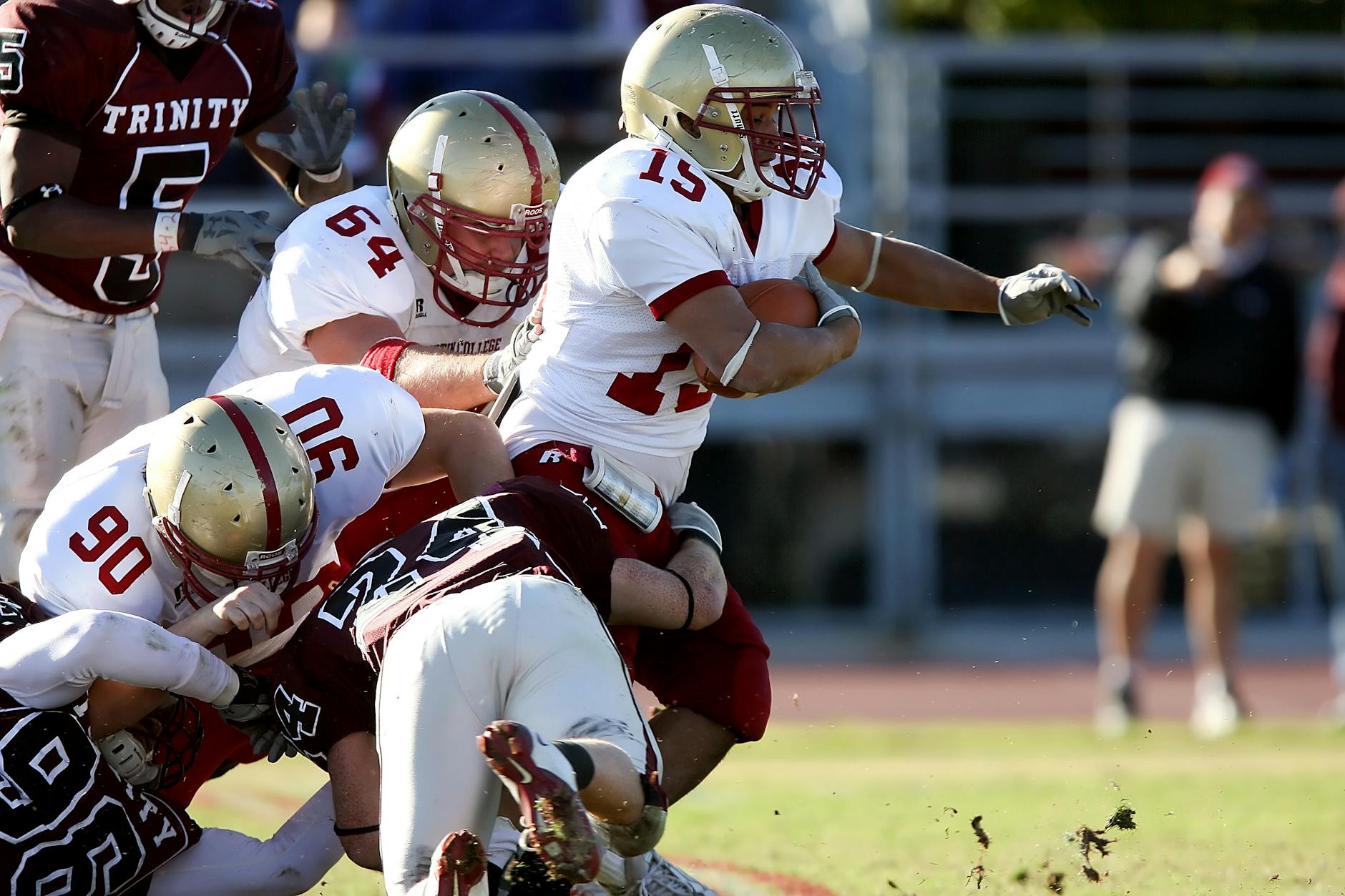
Photo by Pixabay on Pexels
If you want to connect rankings, postseason timing, and tactical evaluation, keep your research organized before the CFP race tightens.
What about international openers and neutral-site edge cases?
International openers and neutral-site games deserve separate treatment because they change travel rhythm, crowd balance, practice timing, and betting interpretation. A Dublin opener such as North Carolina vs. TCU should not be graded exactly like a standard campus home game.
This is where I found a genuine edge that many top-level previews skip: early-season neutral-site games can compress preparation advantages. A coaching staff with returning coordinators may benefit more than a roster with more raw talent but new terminology. For a game at Aviva Stadium in Dublin, the venue itself becomes part of the handicap because sleep adjustment, arrival timing, and routine disruption affect execution. That does not mean you blindly fade the more talented team; it means you reduce confidence until you know how both programs travel, practice, and rotate players.
The same logic applies to major U.S. neutral-site games, bowl games, and the CFP. I use this checklist before trusting any number:
- Is the game truly neutral, or will one fan base dominate?
- Did either team travel more than two time zones?
- Is the quarterback making a first start away from campus?
- Does the defense rely on substitution-heavy packages?
- Are special teams stable enough for unfamiliar conditions?
College football, as defined by Wikipedia, is the college version of American or Canadian gridiron football, but the American FBS ecosystem has its own rhythm of rankings, bowls, conferences, and playoff pressure. That ecosystem rewards anyone willing to separate venue context from team reputation. For more tactical comparisons, explore our [Internal Link: neutral-site football betting factors].
Where does college football analysis fail?
College football analysis fails when it treats rankings, odds, and headlines as final answers instead of starting points. The biggest mistakes I observed were overrating preseason polls, ignoring schedule clusters, and reacting to one-score games without reviewing efficiency or opponent quality.
After three weeks of testing my own notes against public previews, I found two recurring failure points. First, “way-too-early” rankings are useful for identifying returning quarterbacks and roster expectations, but they are dangerous when treated as proof. NCAA.com’s early 2026 coverage highlights returning players, Heisman Trophy contenders, and FBS transfer impact, but those stories should be inputs, not conclusions. Second, odds can frame expectations but cannot explain why a matchup might tilt. A line like USC -35.5 with an over/under of 57.5 tells you market expectation; it does not tell you whether USC will rotate young defenders in the second half or whether San Jose State can shorten the game.
Here is the workflow I now use to avoid bad reads:
- Start with schedule placement, not ranking position.
- Compare returning production at quarterback and offensive line.
- Check injury notes only from credible reporters or team updates.
- Review pace, explosive plays, and red-zone finishing.
- Treat betting odds as context, not instruction.
For gambling-adjacent readers, this distinction matters. Goal Moments covers prediction culture, but responsible analysis never means chasing every market. The smarter habit is building a repeatable process, setting limits, and passing when the evidence is thin. A quote from the NCAA’s public-facing championship material is especially relevant here: “Championships are about more than one game.” That principle applies to analysis as well; one score rarely tells the whole truth.
Photo by Jack Biddinger on Pexels
When the data gets noisy, use a repeatable checklist instead of chasing every headline.
Should you try college football analysis today?
Yes, you should try college football analysis today if you follow a structured process instead of reacting emotionally to polls or betting lines. Start with the 2026 schedule, track team context weekly, and save stronger opinions for conference play and CFP positioning.
My recommended beginner routine takes 20 minutes per week. On Monday, review the previous weekend’s results and note injuries, turnovers, and misleading final scores. On Wednesday, compare opening odds with updated team news. On Friday, make a short watchlist of three games: one ranked matchup, one conference trap spot, and one under-the-radar team-building game. This keeps the process manageable while still teaching you how college football actually moves from August optimism to January pressure.
For Goal Moments readers, the bridge from World Cup analysis to college football is clearer than it first appears. In both sports, tournament outcomes are shaped by tactics, personnel, fatigue, and timing. The difference is that college football’s roster turnover, conference structure, and playoff politics make context even more important. If you want to go deeper, pair this article with our [Internal Link: sports prediction research framework] and [Internal Link: responsible betting strategy basics]. The practical takeaway is simple: do not ask only who is better; ask when, where, against whom, and under what conditions.
Photo by Steve DiMatteo on Pexels
Ready to turn weekly games into a smarter viewing and prediction routine?
Frequently Asked Questions
Q: What is college football?
A: College football is American gridiron football played by university teams, mainly across NCAA divisions such as FBS and FCS. The FBS level receives the most national attention because it includes major conferences, bowl games, rankings, and the College Football Playoff. In 2026, fans can follow weekly games from late August through December before bowl season and the CFP conclude in January 2027.
Q: How do I start following the 2026 college football season?
A: Start by tracking the weekly schedule, then add rankings, injuries, odds, and conference standings as context. A practical first step is to mark Weeks 1 through 3, identify each team’s first conference game, and follow one major conference closely. This prevents information overload and helps you understand why a September result may look very different by November.
Q: What is the difference between FBS and FCS college football?
A: FBS is the highest-profile NCAA football subdivision, while FCS is a separate championship subdivision with different postseason structure. FBS teams compete for bowl eligibility and College Football Playoff positioning, while FCS teams have their own playoff bracket. Both can produce NFL-level talent, but FBS receives more national TV coverage, larger stadium audiences, and bigger betting-market attention.
Q: Is college football betting worth it for beginners?
A: College football betting is only worth considering if you use a disciplined research process and strict limits. Beginners should avoid betting on every ranked team and instead study schedule spots, injuries, travel, and line movement. If you cannot explain why a number is wrong beyond “the better team should win,” it is usually better to pass.
Q: Why do college football rankings change so much?
A: Rankings change quickly because college football has a short regular season, uneven schedules, and high sensitivity to losses. A team can rise after beating a ranked opponent or fall after a narrow win against a weaker team. Committee-style evaluation also considers strength of schedule, head-to-head results, conference championships, and overall performance trends.
Q: How much does it cost to watch college football?
A: Watching college football can range from free broadcast games to paid cable, streaming, or ticket packages. Major games may air on networks such as NBC, ESPN, CBS, or Fox, while tickets vary widely by venue and matchup. For example, early schedule listings may show entry prices from around $32 to $52 for selected games, but rivalry and CFP prices can be much higher.
Q: What should I do if my college football predictions keep failing?
A: If your predictions keep failing, audit your process instead of increasing risk. Review whether you overvalued rankings, ignored injuries, missed travel factors, or relied too heavily on one statistic. A useful fix is to keep a simple prediction journal with date, matchup, reasoning, closing line, final score, and one lesson from each game.
Thank you for reading.
Goal Moments · Editorial Archive